All information on new features and technical updates to TeamKinetic can be found here. We aim to update the system regularly based on user feedback and the latest technological developments in the sector.
Roles are a brand new feature for version 2, they sit above opportunities and enable a prescribed on-boarding process for volunteers. Roles are a great feature for organisations that have regular opportunities that are undertaken under the same set of compliance, training, or on-boarding rules.
An opportunity can belong to one or no role and once a volunteer has successfully completed the steps for a role, they can subsequently join any opportunity that belongs to that role; the role authorisation is valid across any opportunity in that role.
Creating Roles
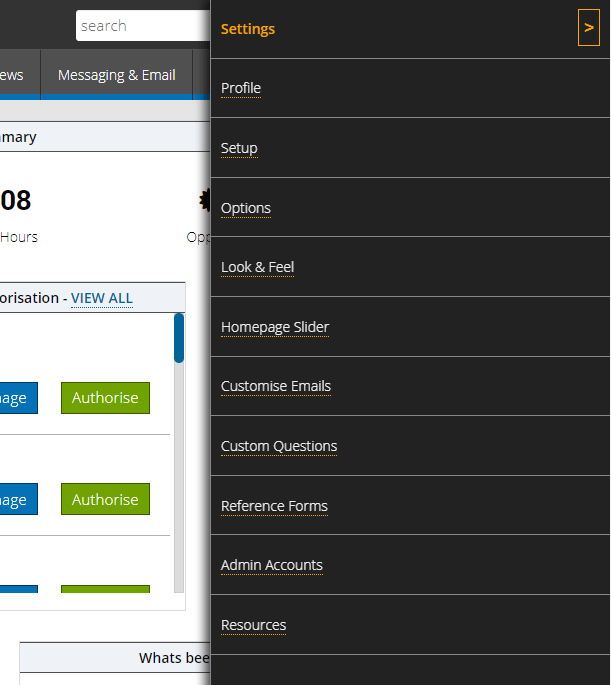
Creating role is only possible for super admins and is accessible via the super admin menu in the SETUP section.
Click the add button to create a new role. You’ll be presented with a split screen form with the role name and description on the left, and the default four stages on the right.
Start by filling in the role name and its description to help volunteers decide if they want to apply for the role.
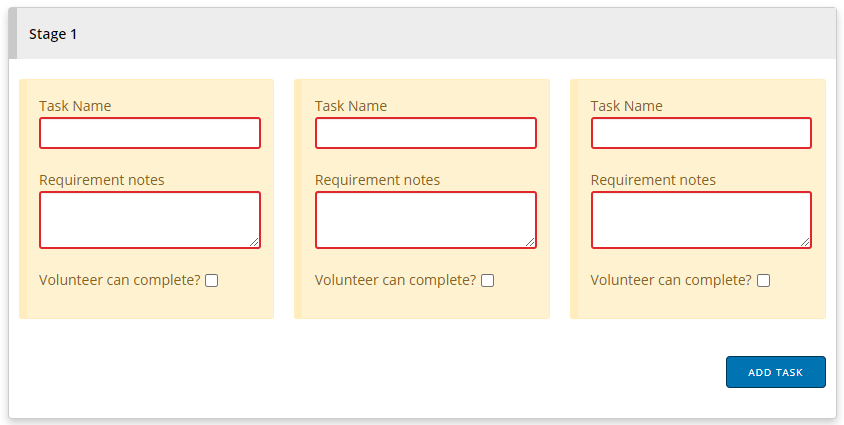
When you are ready to start adding tasks to your stages click the add button. This will open up a sheet with the task name and notes for that task. Additionally you will see a checkbox labelled ‘Volunteer can complete’. If this box is checked then the applying volunteer will be able to mark this task as complete without any admin oversight. This is great if you just want to check a volunteer has read a document or get an auditable confirmation that some step has been carried out.
You do not have to add tasks to every stage, the tasks do not need to be completed in order, and a stage can have no tasks at all if you prefer to put all the tasks in one stage.
Once created you can edit, archive or restore a role and the setup page shows you a brief summary of the role and its current status. When editing a role you can add or remove tasks and update the role name and description. Be aware that adding tasks will not affect those volunteers that have already been accepted on the role.
Managing Role Applications
All admins can manage volunteer role applications and outstanding role applications will appear on the admin dashboard for attention.
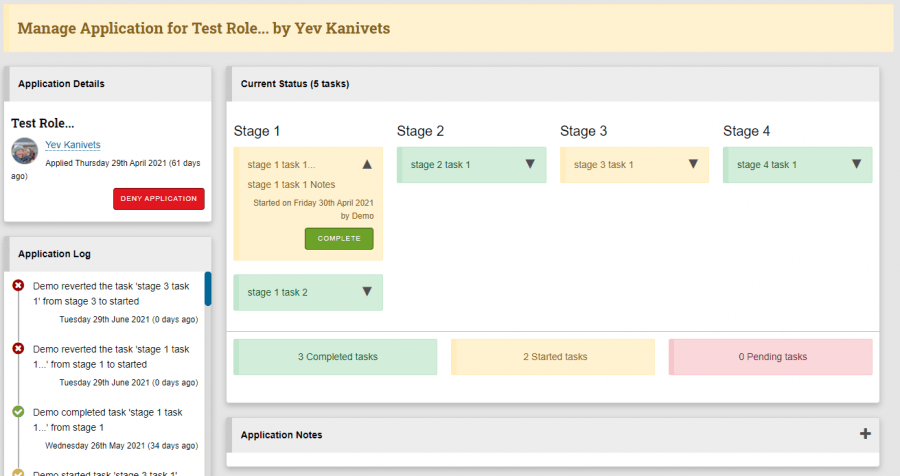
Just hit the manage button and the full status and history of the application will be shown. This is a pretty comprehensive screen but super easy to use.
You can move the status of any task forwards or backwards, from pending to started and finally complete. You can add notes that other administrators can read and update the overall status of the role application to approve or deny.
We have the intermediate status of STARTED for a task so that if a task takes time to process for an admin, another admin doesn’t repeat any work whilst the first admin is completing the task.
Importantly all steps taken are logged and viewable in the application log window. You can see here when tasks were started, completed or reverted back a stage, when people left notes, or when a volunteer has completed a task.
A volunteer will see their role applications on their dashboard. By clicking the more details link they will get a full breakdown of the current role and from here will be able to complete any suitable tasks.
Adding a Role to an Opportunity
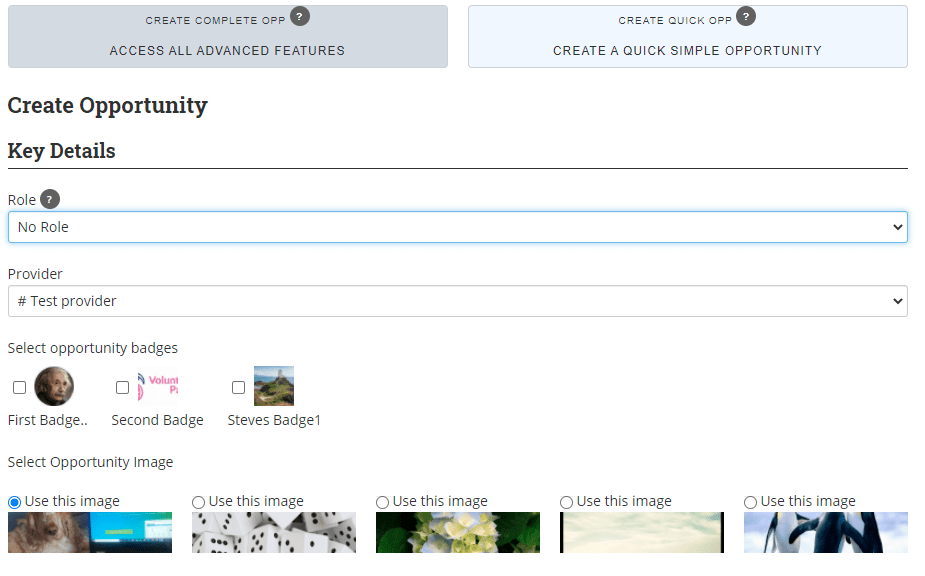
It’s a simple task to add a role to an opportunity. If any active roles exist, they will appear in a drop down when creating a new opportunity.
If you update an existing opportunity and add a role requirement it will only affect volunteers that join after that point; existing volunteers will not be affected.
The 2021 Q2 major release for TeamKinetic is now approaching our beta test phase where we invite and encourage all our users to have a poke around!
It’s a full jump to Version 2 as we have totally updated the volunteer application with the latest .NET platform (admin and provider to come), have introduced some new features and done some major work to align the design and feel across the whole application. We’ve also got some brand new native apps for android and iOS that will be out a few weeks after the desktop release.
Here are some of the highlights for this major release milestone.
Volunteer Roles
Many of our larger customers, and those with greater governance requirements will get alot from this new feature. It’s a bit like super charged APPLY FIRST feature!
A role is a set of steps that must be completed before a volunteer is approved on an opportunity. Super admins define the role, which is organised around four steps, each with as many (or no) tasks as you require. Each role has its own name, description, and a spot to add some information that is emailed to the volunteer when they first apply for a role.
Roles are applied to one or more opportunities, and once a volunteer has completed all steps on a role they can join any opportunity which requires that matching role, once they have satisfied any other pre-requisites to joining.
For example; if a volunteer joins a litter picking opportunity which has a role called ‘basic role’ then they will be required to jump through a number of onboarding steps as defined by the ROLE. But once they have done this they can go onto join any other opportunity which is also linked to the ‘basic role steps’ and it will not require them to go through the steps again (as they have already completed those role steps).
Each task can be flagged as actionable by the volunteer or administrator, they can complete that task from their dashboard when they have satisfied the requirements.
Administrators are alerted when a volunteer joins an opportunity requiring a ROLE, they are alerted via the actions tab on their main landing page.
The administrator can then monitor and record the volunteers progress through each of the steps within the ROLE, through to completion.
Each role task can be started by an admin, then completed and a full history log is maintained and visible at all times.
An application can be approved once all the tasks have been completed, but there is no enforced order to task completion.
When a volunteer is approved on the ROLE they are emailed (custom emails available of course) and shown a list of corresponding opportunities that they are now eligible to join.
Additionally, if a opportunity has its own APPLY FIRST status and a role requirement, then once the volunteer is approved for the role they are automatically placed in the applicants queue for that opportunity, they wont have to do anything else.
New Scheduling Features
We’ve added a brand new feature for adding volunteers to sessions. You can now select any number of volunteers and add or remove them from any number of sessions in one hit!
You can select from the current joined volunteer list, or search for new volunteers.
It’s super simple but much quicker than moving them individually (still available).
We’ve also re-designed our day schedule report so it’s much easier to see what is going on day by day.
You can still view any period and restrict it to certain opportunities or events, but now you’ll see every day in that period in a calendar like display.
You get the day, all the opps that have sessions on that day, how full the session is (full sessions are highlighted) and can click through to view a list of volunteers on that session.
You’ll be able to see empty days and poorly subscribed sessions really easily, then click through and start adding volunteers using the new multi-add feature we just introduced!
Re-Designed Applicants Dashboard
Applicants are now clearly divided into new, successful, and denied. You can instantly approve or deny a new applicant and then revert that decision and mark them as newly approved. This was something that proved popular in the roadmap voting.
The on-screen messaging and alerts have been improved and standardised so you’ll always know what’s happening.
Modern Front Page
Although our existing front page allows for a lot of customisation, many of our customers have been asking for a simpler cleaner look to their front page.
So we’ve have added a new modern layout that will be the default for all new customers. It’s got much simpler settings, just a single image and a message box, to worry about, looks great on all screen sizes, and gets right to the point so volunteers can login and register quickly.
Multiple Provider Accounts
This is a useful little feature for when there are multiple individuals at an organisation that all need to login as providers as manage their opportunities, but dont want to share login details.
Providers can now create and manage their own user list without any intervention required from the admins or super admins. Just add a name, email address and password and they can go ahead and login.
Multiple Meetings and New Meeting Features
Previously a volunteer could only have one active meeting at a time, now you can book and manage as many meetings as you like for volunteers.
Additionally we have added the ability to specify if the meeting is to be virtual, and if so, to add the link to the virtual meeting, or if not the location of a face to face meeting. You can also add a custom message which gets sent along with the normal custom email for new meetings, so you can let them know any extra information they need.
We’ve also tidied up the induction section of a volunteer manage dashboard and added the meeting details there. From here you get a link back to manage meetings and can also add a new meeting for the volunteer right from their dashboard.
Opportunity Badges
These are linked to opportunities showing that the opportunity is linked to a specific award scheme.
Example: If logged hours on the opportunity can go towards a volunteers Duke of Edinburgh Award, then they might attach it to the ‘DofE Opportunity Badge’.
Just add a name, description, and a badge image to create your opportunity badges. These can then be added to your opportunities, filtered on in the search and are displayed to the volunteers.
Great for quickly indicating to your volunteers what sort of opportunity its likely to be.
Gender List Editable in Alt Language
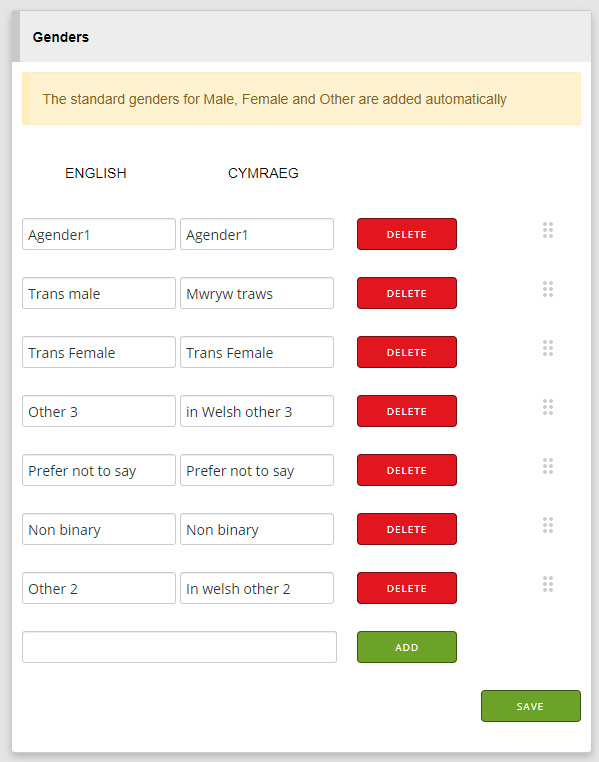
For those of you that take advantage of our alt language feature and translations (and if you don’t..why not?!) you can now view and edit your gender lists in your chosen alt language.
These are instantly reflected on the registration pages..which brings us to…
New Volunteer Registration
Volunteers begin their registration either by providing an email address, or by registering with Google or Facebook.
If they use and email address they will receive an email with a special link to confirm their email address and continue with their registration.
This will cut down drastically the number of bogus registrations and also reduces the initial inertia for registration. This first step of registration is recorded and we’ll be able to get some great insight into what is preventing volunteers from completing their registration.
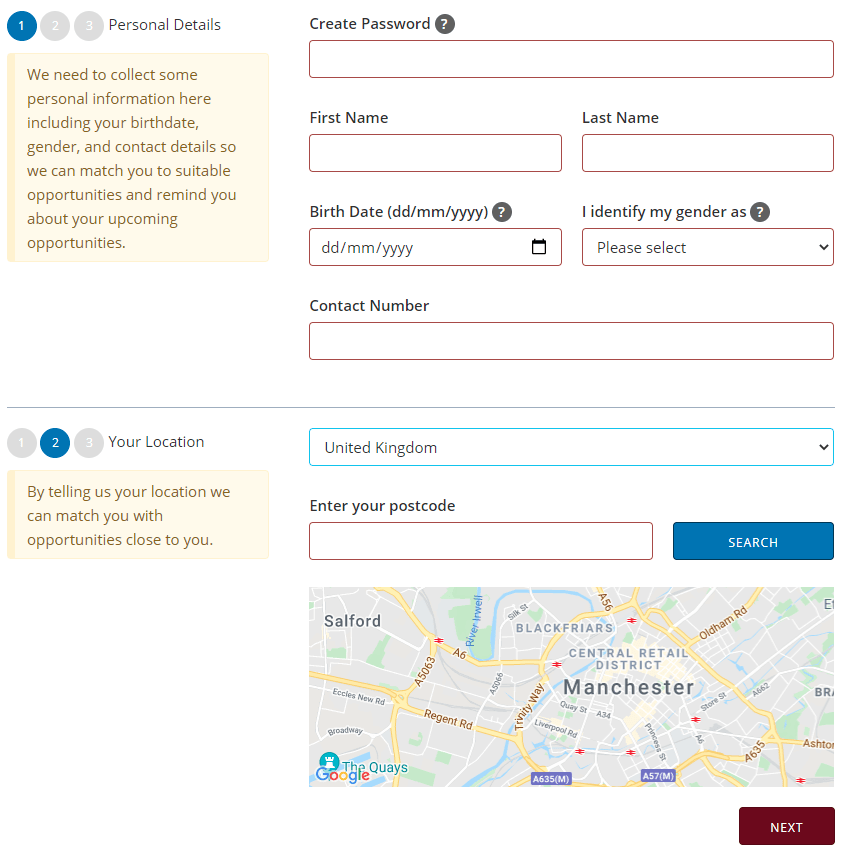
We have also worked on the registration page itself; made it shorter, improved the location section, and added more on-screen help.
We think it’s a definite improvement and will hopefully lead to a higher rate of successful registrations.
New Search Page
The public search page is now more compact and the events have been moved to the right so they don’t obscure the results.
When viewed on smaller screens the layout adjusts accordingly so events are still visible.
Opportunity Images
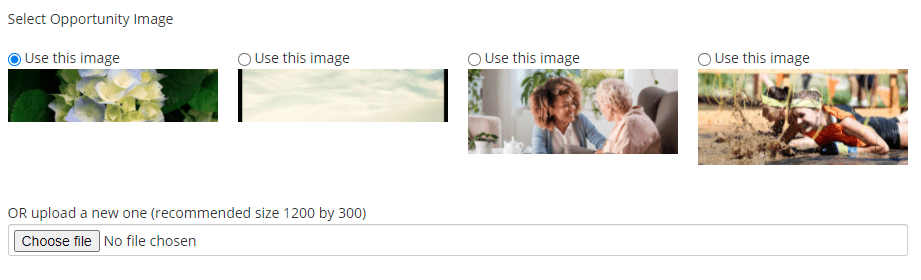
You might have noticed in the screenshot for the search page that we now support adding images to opportunities!
We know from our experience that this has to be quick and painless or providers just don’t bother. So we’ve put in place a number of features to try to make this easy for providers.
Images are mandatory for opportunities, you cant add your first opportunity without uploading at least one image
You can select from your previous images, so once you have one you don’t have to keep uploading
When creating an opp, it will default to your last used image
ABOVE: Admin/Providers view when creating opportunityABOVE: Volunteer view of opportunity with image
It really couldn’t be easier! These images are responsive and will adjust in height and width to cope with any sized screen.
Everything Else
Multiple groups are selectable from the bulk email screens
Can add files to the private notes section
Course management improved
More admin options available
More opportunity sharing data available along with suggestions of other organisations you might want to join forces with
Volunteers can see how many slots are available in each session before they join
Induction questions are now sortable
New report showing the ethnicity breakdown of active volunteers
It has been a busy few months at TeamKinetic during the Covid 19 summer, but we’ve still been updating and fixing TeamKinetic regularly. What we haven’t been doing well is letting you all know about the changes, apologies.
We have now pushed through our last interim updates and fixes before our next major release in Q1/2 2021. TeamKinetic is up to version 1.3.3!
Here is what is new.
New Opportunity Details Layout
We’ve, hopefully, improved the layout of the opportunity details or more info page. Peoples monitors are getting larger with a higher resolution, so we have adjusted the layout to a two column view.
On mobile or small screens this reverts to a single column display.
External opportunities
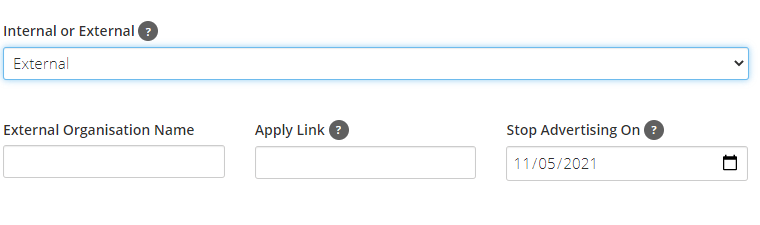
When adding a quick opportunity (super admins can enable quick opportunities for their providers from the settings area), you have an extra option to mark the opportunity as external. When selected the user enters what external organisation is responsible for the opportunity, the web address for more information/application, and the advertising end date.
When a volunteer views the opportunity they are informed its an external opportunity, and are redirected via an apply button to the organisations own website.
It’s a great little addition for when you want to advertise an opportunity that you think your volunteers would benefit from but are not actively managing.
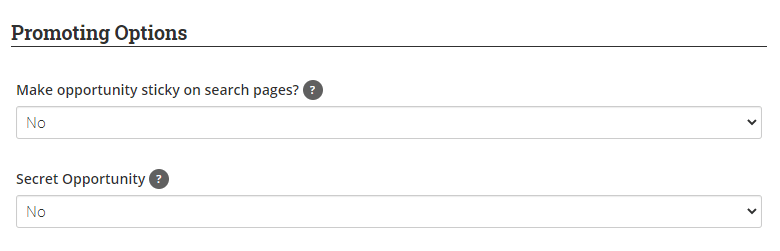
Secret Opportunities
These are not clandestine opportunities for secret agents, but a way to hide open opportunities from search results and opportunity suggestions throughout the application.
Volunteers with the exact link will be able to view and join the opportunity as normal, but those without access to the link will not find the opportunity.
In all other regards the opportunity behaves just like a regular opportunity.
Add Volunteer Meetings in Bulk
You can now create and add volunteers to meeting dates directly from the bulk actions on the volunteer search page. So you can add 10 or 20 volunteers to a group meeting very easily.
We’ve also updated the text a little to make it clear that you can enter a zoom/meet link in the location field if your meeting is going to be virtual.
Private Notes for External Volunteers
You can now add private notes to external volunteer profiles. These private notes are not viewable by the administrators of the volunteers home application.
New Volunteer Search Filters
You can find two new filters in the TYPE area for a volunteers disability and special needs status.
Completed Community Task Report
We are still working on getting some more insightful reporting around community tasks in the next major version.
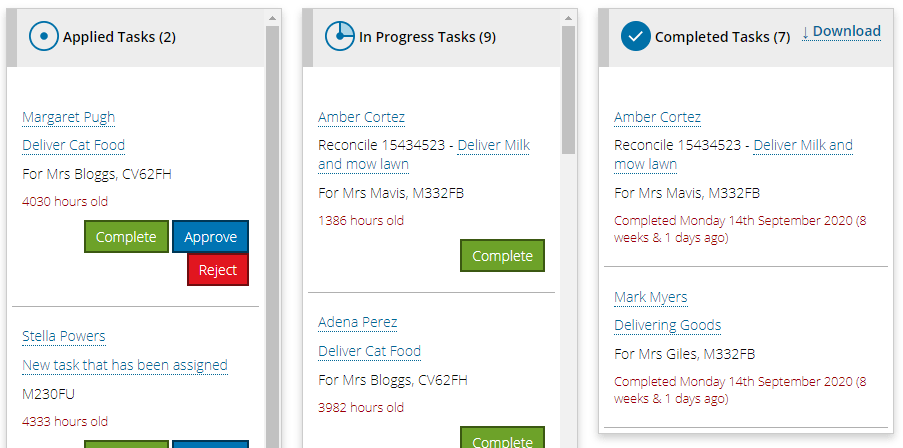
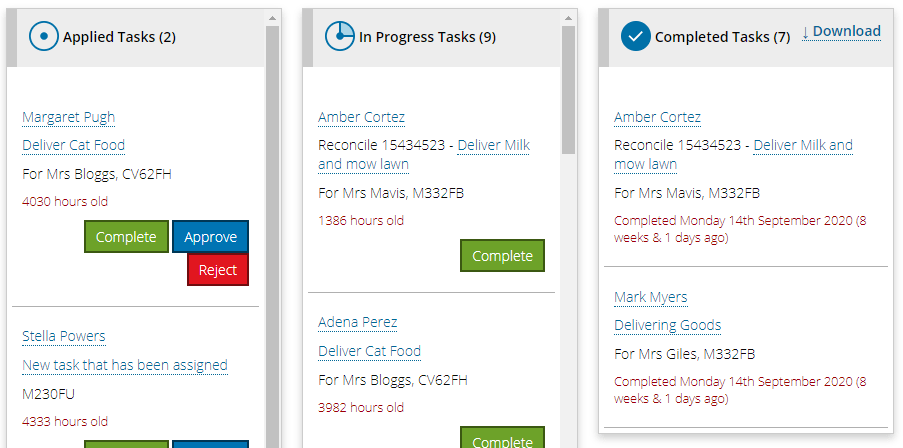
In the meantime, you can download a complete list of all completed tasks from the community task page. It includes dates, times and which volunteer that completed the task.
You’ll find the download button at the top of the completed task column.
Healthcheck Status Included in Member Downloads
This is an update for the accredit module in TeamKinetic (interested in managing events and printing access badges straight from TeamKinetic? Get in touch).
When you export event member details the export now includes their latest healthcheck status.
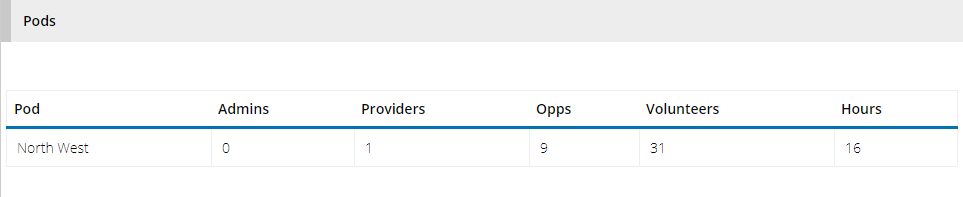
POD Report
We’ve included a small POD report in the main reporting area which tells you how many admins, providers, opportunities, volunteers, and hours are in each pod.
We will be adding some more detail in the next major release.
Public Roadmap Accepting Votes
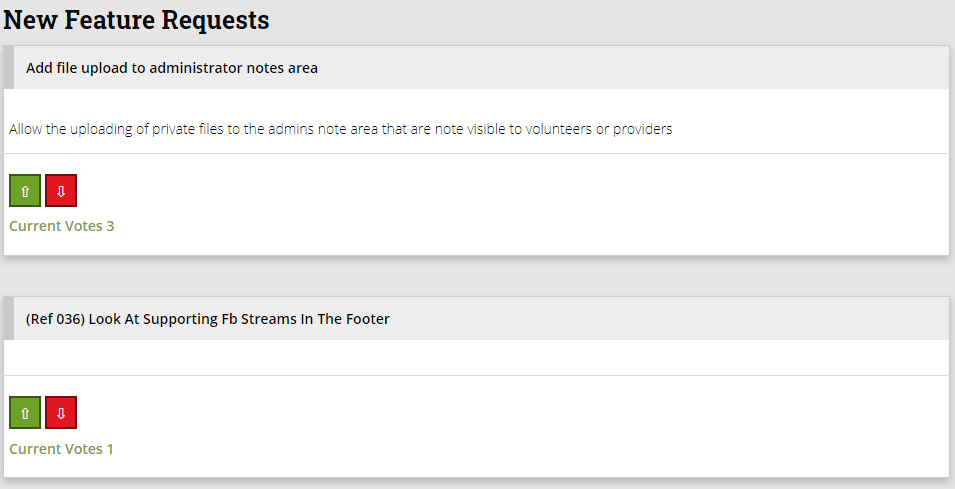
You can now access our public roadmap straight from the help menu, read up on what features might be heading down the road and also importantly, vote on the features you would most like to see.
We will be keeping an eye on the votes and endeavouring to push the most popular features to the front of the release queue, so get voting.
New Help Videos
We have added a tonne of new help videos to the Tutorial Videos section in the your help menu.
They are super short informative videos about specific features or processes and well worth a look.
Increased Maximum Image Size
The maximum width of images for provider and event profiles is now 1900 pixels, so the quality of the image on large displays is now a lot better.
We have also adjusted some of the image processing to improve the size/quality performance.
Facebook Live
Please join us for our Facebook Live on Friday 13th at 2pm on our Facebook TeamKinetic Customer Group to see these new updates in action. Make sure you are a member of this group before 2pm tomorrow to make sure you can watch the live! Just click here to go to the group.
We are delighted to see more organisations decide to use our COVID community task app and we recently zipped past the 2000 completed task mark.
We have been responding to feedback and continuing to develop the application and functionality; the most recent additions are showcased below.
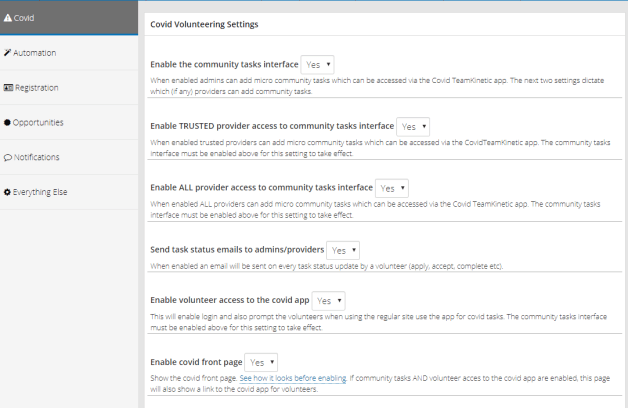
Remember if you want to enable the COVID community task features you can do this at anytime from your super admin options menu.
Push Notifications
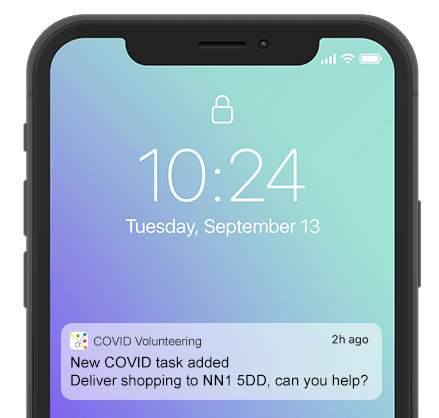
Users of compatible devices and browsers will now receive push notifications when new tasks are created or when any actions that concern them directly are performed; task application updates and new task chat messages. Unfortunately, Apple iOS devices do not offer support for push notifications via progressive web apps. Apple iOS users will continue to receive notifications via email when their task status changes or chat messages are sent.
Password Reset
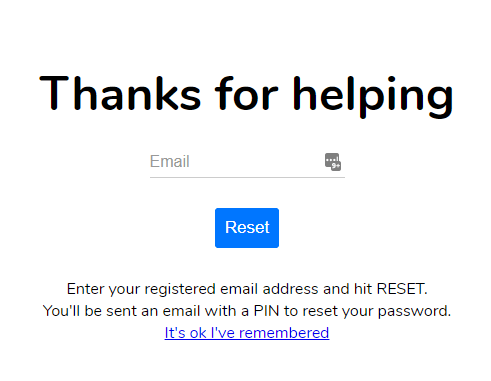
Volunteers can now reset their password directly from the app. They can enter their registered email address and will be sent a PIN which they can enter directly into the app and generate a new password.
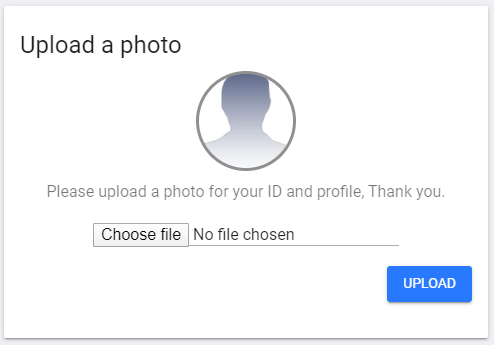
Photo Upload
When logging in, if the volunteer does not yet have a profile picture uploaded, the app will ask them to upload one.
The volunteer can change their profile picture at anytime by tapping on the current photo.
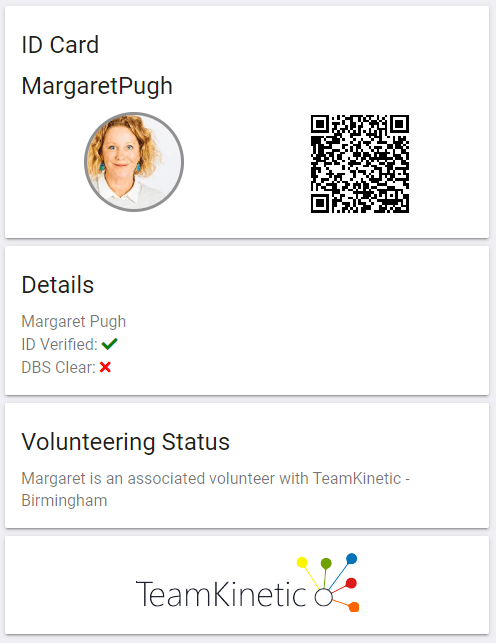
ID Card and QR Code
We have added an ID card to the volunteer app so that if challenged when outside the volunteer can show some evidence that they have a valid reason for leaving their home. The included QR code when scanned confirms the volunteers photograph and current status.
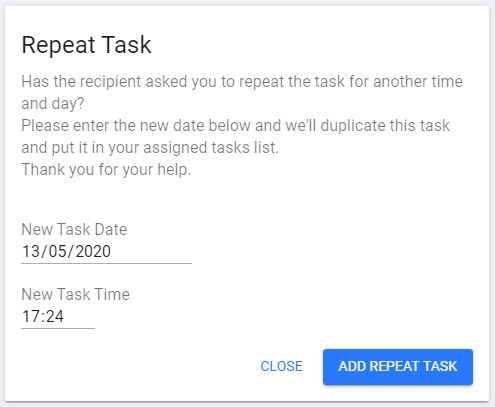
Repeat Tasks
A volunteer can now enter a repeat task when completing an existing one. So if the recipient asks the volunteer if they can come back next week, they can record it and you can track it just like a regular task that you have added.
All the task details will be replicated, except the date and time and auto assigned to the volunteer.
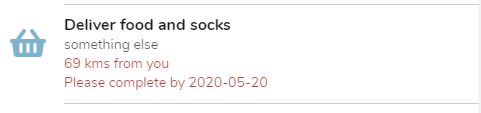
Target Completion Date Shown
The target completion date is now shown on the assigned task list without having to tap to show the task details.
These are all the questions asked during our webinar. To find something more easily, try pressing ‘ctrl’ and ‘f’ on your keyboard then typing a keyword.
Can I watch the Webinar again?
You can see the webinar we did on Friday 3rd April at 2:00pm below. If that doesn’t work click this link.
You can see the webinar we did on Friday 3rd April at 4:00pm below. If that doesn’t work click this link.
Where can I see/test these features out?
You can try out the task management on our demo site. Use the login details: Email = info@teamkinetic.co.uk Password = password You can view and download the volunteer app here. Use the login details: Email = kangarolf@yahoo.co.uk Password = password
Is this free to organisations/groups?
We are offering TeamKinetic Advanced for free to community groups for 3 months during this crisis. More formal organisations such as volunteer centres can access special pricing on our Enterprise addition if required. To get started, go to our website.
Do the mutual aid groups count as small community groups?
Yes, though if they require our enterprise edition there may be a small fee.
How do I switch these new features on?
Watch this short video that shows you how to set this up on your system.
Can we import existing volunteers via CSV or from another system?
There is no automatic way to import volunteer details, although it is possible, there would be a charge incurred for migrating the data. Alternatively, you can INVITE them via a CSV file and the system will track if they sign up.
This is often better as the information is up to date and you will know that you have captured all the relevant information. (When you migrate data there are often gaps in the information where we now require information that was not captured in the first instance.)
Is this all GDPR compliant?
Privacy by design is central to our development process. The new features comply with GDPR and you remain the data controller for your data.
On the front page, instead of using the words ‘volunteering operations’, why not ‘volunteer tasks’ since the app is called a task?
You will see in the latest version, once you switch on these features you have a box for ‘Tasks’.
Will existing volunteers have to register again as COVID-19 volunteers?
No, but you may have some new processes that they need to complete before you allow them to be a COVID-19 volunteer (e.g. upload their ID).
Do all existing volunteers get to see these opportunities?
All existing volunteers that have access granted to your current application (i.e. they have been cleared after registering) can access the new COVID application.
They will see opportunities whose criteria they meet (criminal check required, etc.) in distance order from either their current location (if given) or from the location entered in their profile.
They will only be able to see these new tasks via the COVID app, they are not visible on your main website.
Can we have custom fields?
You can not currently add custom fields to TASKS, but this may be something we explore in future development.
Can the text on the landing page be made clearer? People have ‘registered’ and assumed they are volunteering. But they have not joined/ applied for an opportunity.
We will look at the wording on the landing page.
We strongly encourage you to look at your current post-registration email and make sure you are being very explicit about what you want your new volunteer to do next.
We also know that some organisations have had some very good results by emailing all volunteers who have registered but not as yet gone on to join a volunteer opportunity. Hit those volunteers with some direct messages via email and SMS text explicitly telling them to sign up for a task or an opportunity. To do this watch the video below.
Is this standalone or can it be linked to an opportunity already in existence?
‘Tasks’ are standalone right now, this was done for speed of development and the unique situation this crisis presents. Looking to the future this will be something we will be looking to integrate into the normal TeamKinetic App.
Can you set age limits on tasks?
No.
Does it automatically add the volunteer hours and feedback?
Not currently, as these opportunities don’t necessarily convert very well to an hours metric. Though we will explore some other methods for tracking these Tasks.
In the ‘Search Volunteers’ filters, how do I filter volunteers I have already emailed?
You cannot directly search by volunteers you have never emailed. It is possible though to filter by those volunteers that have not joined an opportunity and/or that registered before or after a set date. So you can every month use the NUMBER OPPORTUNITIES JOINED in conjunction with the REGISTRATION DATE to select everyone in that month that has registered but not joined an opportunity and email them.
Does it use ‘Push Notifications’ via the app or are volunteers updated by email?
Not currently Push Notifications, but it is on our roadmap. Volunteers can be contacted by email and SMS text and via the chat function within Tasks. Push notifications are difficult to set up and are not consistent between iOS and Android. We will be looking at adding in-app notifications in the short to medium term.
Is there a safeguard in place in relation to the number of hours a task has been assigned before it’s completed?
The age of the Task is displayed in hours and days on the Task details. There are no reports or warnings yet around tasks that are beyond their target date by a given interval. They will, however, always appear at the bottom of the unassigned list.
Some of the referrals we’re getting through may be urgent in nature, is there a RAG rating on the tasks?
We don’t have a RAG (traffic light) rating on tasks. You could use words like urgent in the title for now.
When we have tried this in the past we find the system quickly becomes diluted as provider, given the choice, selects urgent!
Can you request certain volunteers do certain roles, i.e. if they are in Aldi already getting the volunteer to pick up multiple shops at the same time?
Volunteers can be assigned multiple Tasks by an Admin or a Provider user or they can also self-assign multiple tasks. So they could join multiple tasks which involve picking up food allowing them to complete multiple tasks in one shop.
Is there a place where people can record money changing hands?
As you can imagine, money is involved, there are significant risk factors to take into account, so it is not the type of feature we would want to rush, but it is something that we will look to tackle in the next few weeks.
Can we upload photos of shopping receipts?
This is a great idea for a feature and we will add it to the road map.
Is there a diary linked to this?
Not currently, though we have taken note of this and will be looking at different user interface options as we continue the development of the application.
Is there a word count on the notes area for example, where shopping lists are very long?
The word count will be sufficiently large to allow quite detailed notes. If you find it is insufficient please raise a support ticket and we will look at extending this.
Who will be putting the information on? Is it Volunteer Centre staff?
We envisage Tasks being added by both Admin users and Providers depending on the organisation, but mainly providers.
Who are the ‘Providers’?
A provider is someone/an organisation who advertises a volunteering opportunity.
Does it connect into local voluntary and community groups who are coordinating various volunteer activities?
Yes, this new TASK functionality will allow these community groups to register as a provider and manage their volunteers via your system.
Who can add tasks – any provider? Approved providers?
Admins can either allow ALL providers, only TRUSTED PROVIDERS, or SPECIFIC (handpicked) providers to add tasks.
Can we hide the ‘community tasks’ from some providers?
Yes.
How will it be coordinated with Local Authority contact centres?
We know the landscape varies across the country, so we are trying to build these features to be as flexible as possible. We have examples of the Task system linked to other systems within the council and examples of council staff being established as providers so they can add Tasks directly or via some sort of upload function.
Some centres are not managing volunteers directly, such as PAVS. But we see that this might work for our providers, it would be useful if a little “how-to?” could be produced for us to disseminate to the groups.
I think this would work for mutual aid groups, but it’s not our job at VC to do this – I think this is functionality for providers not for us. Mutual Aid groups in Gwynedd have already got systems set up – I don’t think they would move over onto a completely new system now.
We are not forcing anyone to use this system and appreciate you may have a solution that is working locally. As mentioned there may be the ability to link alternative systems together as we are doing in Greenwich, but this will involve a cost and some additional work.
The functionality is mainly aimed at providers, and specifically, community volunteer coordinators who don’t have access to tools to manage their volunteers.
Who actually checks the volunteers? Is it us Admins within the volunteer centres that approves the volunteer?
The on-boarding of the volunteers remains the same with regards to TeamKinetic. The volunteers still register the same way they did previously, you may decide locally that your process has to change to deal with the particular issues of this situation. But there are ‘flags’ against each volunteer to be ‘Cleared’, ‘Inducted’, ‘Criminal Check’, and ‘ID Verified’ which can all impact volunteers’ access to tasks. So if you specify that a task requires volunteers to have shown their ID, then it will only allow these volunteers to join the task.
What is being done around volunteer identification?
We have included the ability to mark a volunteer as having ID, and restrict tasks to ONLY volunteers who are marked as having submitted their ID.
If the volunteer isn’t assigned to a group/provider, who validates them and checks them?
Volunteers will appear to the Admin as they have previously, waiting to be cleared. You may wish to enforce additional checks or required documents such as picture ID or proof of a criminal record check. You may also wish for the volunteers to include a picture of themselves for example, which can be locked so they can’t change it after it’s been checked. These features can all be enforced via the Super Admin area.
Some customers are using text messages, requesting the volunteer upload the appropriate ID documents. They have set up a template text message that they send to the volunteer once they have agreed to do a task which has our organisation name and phone number on so that they can upload the appropriate documents.
Most of our existing volunteers don’t have ID on the system. Does the system stop them taking a task if they haven’t proved their ID on the system?
We have added a new flag for volunteers so admins can start to mark volunteers having provided ID. We will be adding this flag as a filter to the tasks presently. It will be a decision for each organisation if they want to go back and historically flag volunteers and use the ID restriction on tasks. We will be able to help with identifying volunteers with uploads, please get in touch via support ticket.
The lock feature you mentioned available on Downloadable Documents is not available on my system? I am a superuser and have been using Downloadable Documents all week.
Downloadable documents are different from the documents that are uploaded to a volunteers profile. Downloadable documents by their nature cannot be affected by a volunteer. It is possible however to upload a document to a VOLUNTEER’s profile and disable the volunteer from being able to remove it. Locking documents is covered in the ‘Adding Volunteer Documents’ video above.
How do you record who has DBS checks?
These checks are recorded in the same way as previously in TeamKinetic. Here is a short video on how you can do this.
DBS can only be added by an Admin user. These details are visible to providers via the volunteer profile.
How will Providers know if the volunteer needs to have had a DBS check? How will you be able to check that the volunteer has really had that?
Criminal records checks can be recorded in TeamKinetic by Admin users only. Tasks and Opportunities can be limited to those volunteers that have a valid check in the system.
This will depend on some extent to some support and training from the Admin users for the Providers.
I thought the DBS/criminal record check function was turned off for Volunteering-Wales.net?
The criminal check sections of a volunteer’s profile are always available. So you can always record a criminal check against a volunteer. There is also a super admin switch (which is currently switched off for Wales) that controls if the criminal check restriction is available when creating new opportunities.
It was switched off for PROVIDERS as many providers were saying that the opportunity required a Criminal Check, but the volunteer couldn’t join the opportunity as they didn’t have a criminal check against them in the system. But it is always available for administrators to add a criminal check to volunteers.
One of the issues is around managing these tasks. Many volunteers are doing these tasks on an ongoing basis and will agree with an individual as and when they’re required to go shopping. How will this work with the app?
We are already working on a solution to this issue, with tasks that are ongoing and require more than one volunteer and we expect to see those functions soon. We are looking into FOLLOWING A PROVIDER which could send an email to volunteers who are FOLLOWING, to inform them that they have recently added a task.
Is there an option to confirm ‘task completed’ and all satisfied?
Yes, see the short video below.
If new volunteers sign up for a task, how can providers provide them with code of practice/ safeguarding info appropriate to the task?
Can we build in Volunteer training/ guidelines as they sign up?
You can continue to use the Document Hub in the Super Admin area for both Volunteer and Providers, see the video below to see how you add documents.
Further Guidance from WCVA will be shared with our Welsh customers as it becomes available.
Can you assign tasks directly to someone who has not applied? I already have people on a waiting list?
Yes, below is a quick tutorial – how to assign a volunteer to a task.
How does the volunteer join their local support team (community group) on the site? Can our ‘Street Champion’ role only be open to volunteers accepted on that opportunity?
Right now that is not possible, but we are exploring the ability to be ‘linked’ to a provider for a future update. So a provider may have a group of local volunteers that they know and want only to engage with rather than other volunteers from the system, that they may not know.
Please can we as admins have the function to authorise these tasks? We don’t want volunteers taken advantage of and we don’t want the private data being passed into the wrong hands.
We are trying to add a pre-approval process by admins for all provider created tasks. We will endeavour to have this ready for release or soon after. You will always be able to DELETE unsuitable tasks until we can complete this change. It is a balancing act between not requiring administrators to get involved with every task transaction, but giving them enough control to be able to identify tasks that should be removed.
Can individuals register their requests for support (for example shopping requests)? Or the group admin has to record these individual requests of the system?
The admin or Provider can add tasks. At the moment if a person requires support they could either register as a Provider or contact an existing Provider or administrator so the task can be added to the system on their behalf.
This task app may work well if you add an ‘Ask’ session where the public can ask for support, then we can create a task from their ask… is this possible? we have people contacting to inform us about needs in the community for example.
It’s a great idea and one we will look at if people think there is an appetite for this.
How soon will the ID function be available?Can any individual that registers on the site print out a volunteer ID? Are we assuming that everyone will be a safe volunteer?
On the ID function and approval of it. WCVA is discussing at a Wales-wide level to get Police others buying in and support for the approach. We will update all hopefully next week on how those conversations have gone and how this feature may develop based on what the police state they require.
When we set up a task, can that task be saved as a template task so we can use it quickly to set up the next task? E.g. automatic upload of saved or previously typed words/data.
Not at the moment, there is only one field (Task Title) which may be a similar form task to task, and we have already added an auto-suggest functionality to this field. The other fields will be different from task to task (e.g. recipients address, or shopping list).
We will also explore CSV uploads and an API link where appropriate with clients to do so.
Can you download the documents uploaded by Volunteers in CPD & Documents area? We’re considering the most secure way to share images of say DBS checks with providers.
Yes, you can upload and download copies of documents. Though sharing Criminal Records Check information may have significant GDPR considerations as this is sensitive data. It would be our suggestion that you share the DBS number and direct your providers where necessary to check those numbers on the DBS website. Alternatively, you can check the number for them on the DBS site.
Is this new section of Volunteering Wales bilingual?
We will be working towards a bi-lingual interface, but initially, we will develop the English version as we know speed is paramount at this time, once we have an interface that is relatively stable we will look to add the Welsh language elements.
Are you going to have a limit on how far a volunteer can travel to apply for a volunteering role?
Opportunities are filtered initially by proximity and it is the assumption that people will be looking to help out near home. We have no intention of adding an arbitrary distance currently but if this becomes an issue we will be happy to revisit.
Is there a report built that shows things such as average time for completion, etc?
There is little reporting right now, but this is something we are aware of and will be thinking a little more about as we get more data.
The tasks need to clearly state who the provider is.
We are open to this type of feedback and we will see what we are able to do, to improve the user experience.
Does this mean that ‘Informal Groups’ COVID-19 Neighbourhood and Mutual Aid Groups are now able to register themselves as Providers, not just the usual formal (registered charities/Groups etc)?
Our usual minimum requirement to register a provider is a volunteering policy and insurance. Which may not be appropriate for those small groups, as we don’t know most of these groups how do we know they are legitimate?
If you know the people running these opportunities and Tasks then they are probably ok to be approved. Most are well-known people in communities and local councillors. It is open to local discretion.
Could the informal groups be registered as COVID-19 providers and keep them away from the main section of the site? Maybe only COVID-19 providers should be able to see COVID-19 tasks.
This is not currently available but is certainly something that could be considered in a future update. We will add it to our development road map.
Once a volunteer selects the task, is it no longer open to others, i.e. can more than one volunteer select one task giving the provider a choice of who’s best suited?
Not currently, but it has been talked about for a later version of the app.
If there is something already in use in a county can the function be turned off so volunteers aren’t trying to sign up to tasks that won’t exist?
Yes, this is an optional feature set that can be switched on and off as required by the Admin. You can see a short video on how to do that below. We are also allowing you to use these features on a provider by provider basis.
Do you have any publicity that would help us with promoting this new function, please? Coming from WCVA/WG seems to help us locally and is seen as more ‘official’.
We are working with the Welsh Government and other partners on this.
How are you going about promoting it to the community groups?
We need your help, please feel free to share TeamKinetic with other organisations or community groups you think might benefit.
What is the URL for the TeamKinetic blog?Will the comments be available on the blog as well?
Yes, and now you’ve reached the end of our FAQ section! Feel free to browse our other blogs by clicking here, or visit our website.
Still Have Questions?
Send us your questions via Facebook, Twitter, LinkedIn, or on the YouTube videos at the top of this blog post. We’ll try and respond ASAP and we’ll add them to this post or everyone else to see!
You can also call us on 0161 914 5757 or email us at info@teamkinetic.co.uk.
We have been slowly pushing out our 2020 Q1 interim changes for v1.4.1 and this will be complete by 7th February 2020.
You’ll have noticed a few differences already but these are the highlights, along with many bug fixes.
Improved Accessible Universal Search
The universal search is super useful but we know some customers are having trouble with the time delay used before searching and focusing the mouse on the results box.
This was done to improve its accessibility because without that switch of focus to the results window users of assistive technology and keyboard only users, would find it difficult to access the results.
We have listened to the feedback and have completely redesigned the universal search so that it is now even more accessible without annoying mouse users by switching focus.
The same results panel will appear but it now captures keyboard inputs so that using up and down, escape and return will enable keyboard users to navigate the list without ever switching the focus from the search box.
In addition all the correct ARIA attributes have been added and an additional assertive announcement for screen readers that will let the user know how many results have been returned and how to navigate them.
Login With Social Media (Single Sign On)
You’ll see a change to all login pages shortly; admin, provider, and volunteer login pages will have additional buttons for logging in with Google, Facebook, and for providers and admins, LinkedIn.
Your registered emails will have to match of course but if they do and you are already logged in with Google, Facebook or LinkedIn, you’ll get bumped straight to your dashboard just by clicking one of the social media sign in buttons. The first time you do this you may be asked to give TeamKinetic permission to receive your email address, we have to get that in order to match your account.
New Search Behaviours
We have adjusted the way the search filters are added to make them more accessible. Previously when you selected the type of filter it would be added automatically to the search. This renders it unusable for keyboard only users as they are not able to skip through the available filters without triggering their addition. So we have added a physical button you use to add the filter and some other improvements to make the search accessible.
New Search Filters
We have added some new filters to opportunity, provider, and volunteer searches, and also rearranged some others.
The new TYPE filter now contains multiple types of opportunity you can filter by, sessional, flexible, applying, and requiring references. We will be adding more as we test them.
For volunteer search we have added date FIRST and date LAST joined an opportunity along with a LINKED TO filter for finding which volunteers are linked to which providers.
Improved Reporting Text
We have updated the help tool tips on the reporting page to better explain what data is being shown. In particular around what is meant be converted, new, active, etc.
Universal Search Updates
The ordering of results has been changed so that older, less active volunteers, opportunities, and providers are less likely to appear in the top 5 results that are shown if there are many matches.
Dashboard Updates
We’ve altered the open opportunities display to remove the open/closed status (because of course they are all open!) and switched in a text category status which is also an accessibility improvement as the category is not communicated solely with colour.
There are lots of other smaller improvements, like adding more notifications to the top left notification area when actions are taking place, standardising button behaviour, harmonising more user interface elements and generally cleaning up!
For week three we will be discussing a new feature whose beginnings you may have spotted and wondered about in our last release; trusted providers.
Trusted Providers
Trusted providers have an elevated set of privileges compared to your regular providers. The could represent for instance, providers that are internal to your organisation, or those that have received extra training.
To add the trusted status just use the button in the provider management page. You can also use the new provider search pages to change the status of multiple providers in one go.
What are Trusted Providers?
Trusted providers have some extra abilities over your regular providers;
Their new opportunities are auto authorised
They can add criminal check and induction required status to their opportunities
They can add any volunteer to a session, not just those that have already joined one of their sessions or that is linked to them
Welcome to week two of our pre-release introductions to the new features coming in TeamKinetic 1.4.
This week we will be focusing on the new features in the add opportunity page and when searching for opportunities.
Adding a New Opportunity
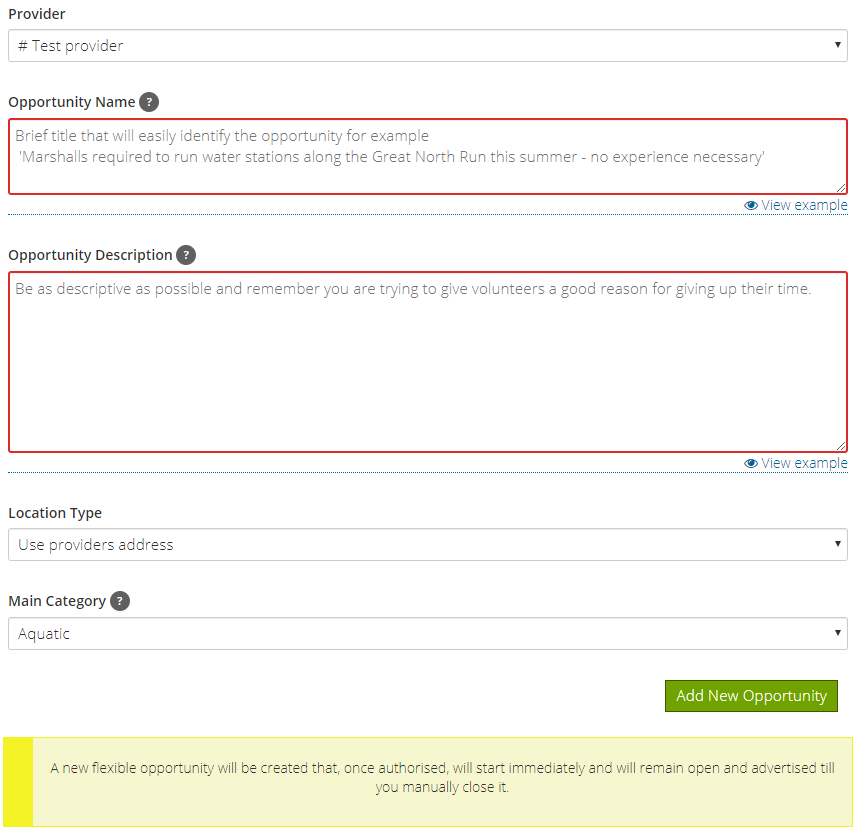
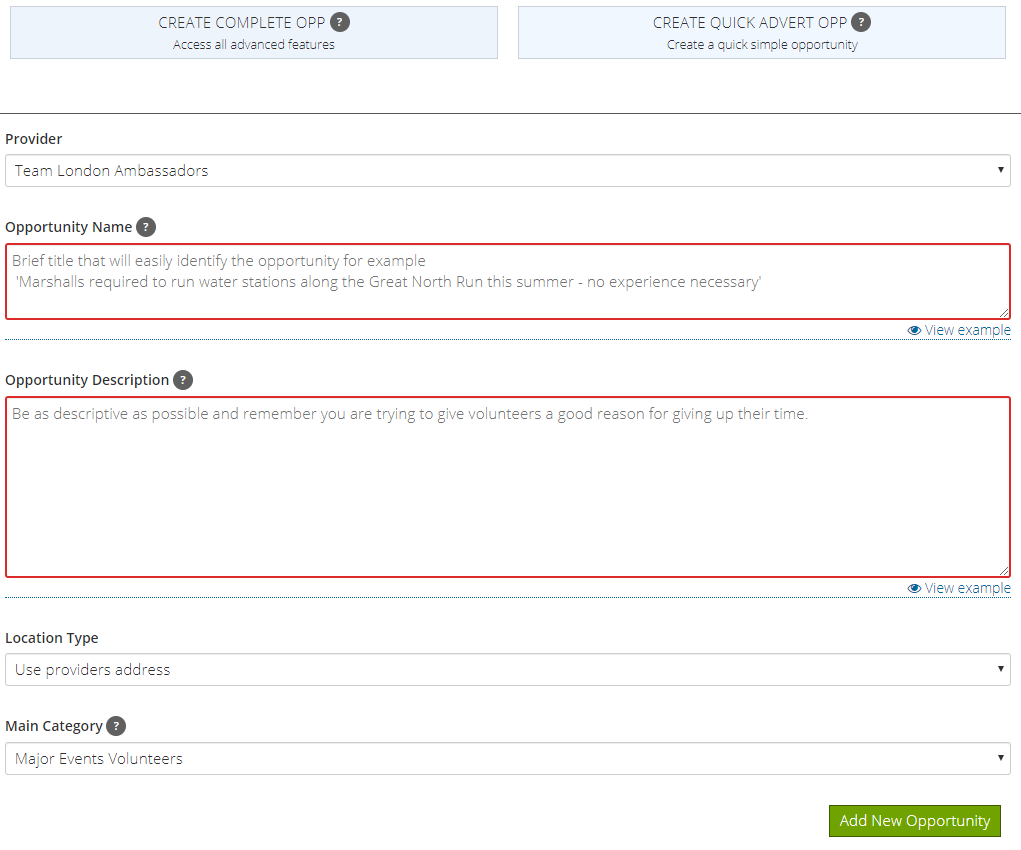
When your admins or providers add a new opportunity they will now be given an immediate choice of whether they wish to create a complete or a quick advert opportunity.
If they choose the quick opportunity type they will be presented with a much reduced option list for the opportunity. This is aimed at people that either don’t have much idea of what the final opportunity details will be, but want to get on and start recruiting, or for those organisations that will probably be managing the post sign up process themselves.
The resulting opportunity will be a flexible opp that is set to start immediately and will run continuously.
Once created the provider and admins will have full control over the opportunity and can add further details, or convert to a session based opportunity at anytime.
We have also updated and we hope simplified adding sessions to an opportunity. We’ve taken out some of the confusing language around the types of opportunities you can add and instead just asked them to make a choice between an opportunity with sessions and a flexible opportunity without sessions.
If a user picks the session based opportunity they can then choose a recurring session structure or can add the sessions individually.
Searching Existing Opportunities
For 1.4 we have a great new set of features for searching and filtering opportunities.
You’ll notice straight away that this is very different from our previous opportunity search page!
You can now page through the results, add filters, download the results and perform bulk actions on the opportunities by clicking the checkboxes at the start of each row.
This type of search table will be appearing throughout the application in future version and is already implemented for volunteer and provider searching complete with custom field filtering.
TeamKinetic v1.4 will be released on November 5th, there will be fireworks and parties all across the UK!
1.4 is a big release where we have brought together many requests for new features and also importantly we have made big steps towards unifying the interface to create a consistent experience everywhere.
1.4 will probably be our last new feature focus release for a good while. The next few releases will be focused on continuing the unifying process, improving the foundations, continuing our accessibility improvements and tidying all those loose ends up.
We have added a brand new email editor so that you can customise over 30 of the TeamKinetic automated emails.
New Searching for Volunteers, Providers and Opportunities
Completely rewritten search pages for volunteers, providers and opportunities. Much clearer and cleaner layout with row and bulk actions, paging, and filters.
Search for Volunteers by Custom Field
Custom fields are included in the filters, so you can filter and search for volunteers by all the profile and registration fields you have added.
Ability to Customise Your Genders & Ethnicities
Add, remove,re-order and re-map your gender and ethnicity results. These custom lists will also be reflected in the reports and downloads.
Collect ‘other’ Ethnicity and Gender
If registering volunteers select OTHER from the gender or ethnicity list they will be presented with a text box where they can enter their self identified gender or ethnicity.
You can use the new custom gender and ethnicity management shown above, to view, add and map these other entries.
Trusted Providers
Providers can now be marked as TRUSTED, this means that they will have additional privileges including:
Ability to add ANY volunteer to their opportunities (not just the providers limited cohort of volunteers).
Only allow trusted providers to create opportunities which require CRIMINAL RECORD checks.
Trusted provider opportunities can be auto-authorised.
Set Maximum Volunteers PER SESSION
When creating or editing opportunities you are now able to set a maximum volunteer limit on each session independently. When creating repeating opportunities each session will default to the same maximum but you can then adjust these session by session if required.
Define Time Gaps Between Sessions
Need to define a minimum gap between session that a volunteer can join? Now you can!
If you are hosting an event you may want to enforce a time limit gap to prevent a volunteer joining two opportunity sessions with not enough time to get from one to the other. You can now define the allowable time gap between these sessions. For example, if you define 30 minutes then a volunteer will not be able to join a session that ends at 1:00 pm AND a session that starts at 1:15 pm.
Improve Page Layouts
Courses page
Find Volunteers Page
Find Providers Page
Find Opportunities Listing Page
Parental Consent Phone Number
When a volunteer registers who requires parental consent, it asks for their parents email and in addition for their parents contact number. This information is held against the volunteers profile so the parents can be contacted by telephone if required.
Inviting Volunteers
Administrators and providers can now invite volunteers to your system from their main menu. Volunteers are invited by entering their email address OR uploading a list of email addresses.
Administrators can see the list of all invited volunteers and we have also improved the messaging you receive when duplicates are added.
Volunteer & Provider Downloads Include Custom Fields
When you export your volunteer or provider data it now includes any custom fields.
Volunteer Note Improvements
Providers can now record private notes on their volunteers. These can be used for recording conversations or additional information related to the volunteers personal needs.
Both administrators and providers can now add and remove discrete dated notes creating a history and audit trail for notes.
Improved Interface For Uploading Images
There is now the ability to move and crop images when uploading them to either the front page, providers profile page or the events page.
Registration Captcha Updated To Simpler System
The Google Captcha v2 (the image picking one) has now been thoroughly defeated, which means we are making it harder for people to register but not any harder for robots, so we have removed it.
We now protect your applications from bogus registrations with a number of discreet features that will not get in the way of your volunteers registering.
Improved Interface For Applicants
We have added some notification reminders and visual clues if an opportunity has unprocessed applicants.
If there are any applicants that have not yet received a decision your home page will list them and if you manage the opportunity, the applicant tab will be highlighted and a notification appears in the summary area.
In addition we have improved the default email that is sent to providers when a new application is received to help clarify that difference between an application and a joining event.
Creating Quick Opportunities
The new opportunity screen can be daunting for new users and for those providers that have little or no training. It also assumes that providers wish to manage the entire volunteering life-cycle within TeamKinetic, which is not always the case.
We have added the option when creating a new opportunity to choose a quick opp. This gives a much reduced option list to the provider and allows them to quickly create an open ended flexible opportunity that starts as soon as it is authorised.
Combined Linked Volunteers and Volunteers Searching
Providers can now search for both their active volunteers and linked volunteers from the same search page. They can unlink volunteers directly from the search results and no longer need the separate linked volunteers page.
Pause Emails means PAUSE EMAILS, but not Brexit!
We have changed the pause emails button to pause all emails including when a volunteer is removed from the opportunity or session. When completely removing a volunteer you are given the option of sending the removal email.
Simpler Interface for OWED HOURS
If you have a volunteer who has done some volunteering outside of your system it is now easier than ever to record those hours within you system.
Always Accessible Super Admin Menu
The Super Admin menu is now located on the top right of your screen making it faster for the user to access.
Providers See More About Their Volunteers
We have increased the amount of information that a provider can see on volunteers who join their opportunities, this should help them in identifying who is best suited to particular roles. (NOTE: This also includes external volunteers).
Improved Interface When Copying Opportunities
We have changed the way you copy opportunities, you are now asked ‘what the new start date is?’ and the system will move all associated sessions accordingly.
Adjust The Size Of Your Logo
You can now adjust the displayed height of your logo when uploading.
I have been concentrating on accessibility improvements and changes for the upcoming 1.3 release of TeamKinetic and I thought I would give a little background into what accessibility means for websites and what TeamKinetic have been doing to solve some of the issues in a non-technical post.
It’s a long post but here’s a quick check list of what the focus has been for this release;
Clear focus effects so a keyboard users knows where they are at all times
Keyboard accessible menu and sub menu
Keyboard accessible help tips, activated by the return key and closed by switching focus
Proper use of ARIA tags for all content that is initially invisible (such as help tips, pop up windows etc) so that screen readers will correctly read out the revealed text at the correct time
Correctly labelled form elements so that screen readers can always associate an input (such as a text element) with its description
Grouping together of associated form elements using fieldsets and legends. For instance, a collection of checkboxs for a yes, no, maybe, definitely answer. using a fieldset ensures that a screen reader user knows what question the answers belong to.
Keyboard accessible skip to content links that enable keyboard users and screen reader users to skip the menu and header portion of a webpage and get straight to the important stuff. Can you imagine how tedious it is to have to listen or tab through every navigation element on a webpage before you can read its content!
Correct description tags (alt tags) for all images
Improvements to link and button text by providing additional screen reader only text to give context to the link or button.
Making sure all password fields are marked as ‘new’, ‘existing’ or ‘repeat’ as they are often just labelled password.
Ensuring all webpages are accurately and uniquely titled and described.
Accessibility is often low on developers priority list, its understandable, the number of customers using assistive technologies is likely low compared to the numbers that do not. However the impact on those user that do, is enormous and by ignoring accessibility issues you are effectively blocking those users from accessing your content.
Although being able to access your website is a right for assistive technology users, and it is illegal to discriminate against such users, its also a positive process and a way to learn new skills, engage with a new audience and improve the intrinsic worth and value of your product.
Keyboard Accessibility
Keyboard navigation is perhaps the most important aspect of accessibility for websites. Navigating via a keyboard or something similar is employed by many users with mobility issues that cannot hold, move or control a mouse and also by many visually impaired users.
Keyboard users navigate through a website using primarily the tab key which focuses on item to item in the web page in the order it is served or in a specific order set by the website itself. Whilst focused on any element they can use keys such as the return key to activate the actions of that element, say a button to submit a form or to follow a link.
TeamKinetic enables keyboard navigation and all elements are focusable by the keyboard. There is a clear visual clue to which element is currently focused by the keyboard.
Menus
Its almost entirely universal that a website or application has a menu to quickly access different parts of a system. Its also very normal for the menu to have sub menus that are revealed when the mouse is moved over the heading (this is called a HOVER). As you can see below on the TeamKinetic menu the mouse pointer has been hovered over the menu heading and the sub menu is revealed.
But when a keyboard is used to navigate to the menu item the event is called FOCUS, not hover. If the website does not include the specific code for what happens when a menu element is focused by a keyboard event the user will not see the sub menu or any change in colour/appearance to indicate where in the menu they are.
TeamKinetic’s menus are now fully accessible by the keyboard with visual indicators of where the current focus is. When the focus is on an element with a sub-menu available there is a clear colour change and by pressing return the menu can be toggled on and off. Importantly, if the menu is not activated with the return key the user does not have to navigate through all the items of the sub-menu in order to reach the next item in the current menu.
Skip Links
Skip links are a very important and hugely convenient addition for accessibility. They are hidden links or buttons that a screen reader or keyboard user will expose that enable them to skip past all the header and navigation elements that are the same on every page.
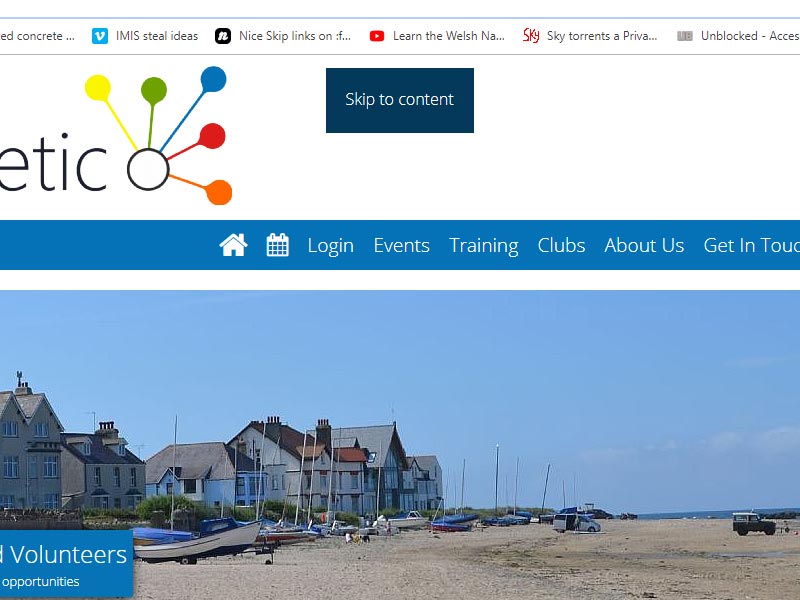
The skip to content link only appears when using the tab key to navigate or when using a screen reader
Help ToolTips
Tooltips are little bubbles that pop up to give the user more information or context about a feature or action. Traditionally these have activated when the mouse is hovered over the target and the tooltip disappears when the mouse is moved away from the target.
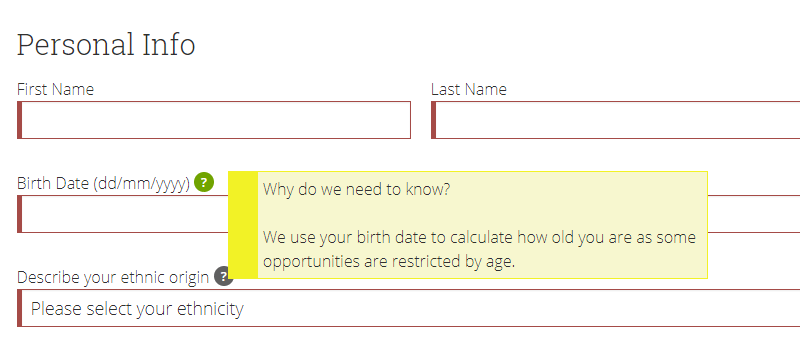
This is problematic for keyboard users that never fire the hover event, only the focus event (see above) that will never see the tooltip and also for users with reduced motor control. We have converted all our volunteer help tooltips into an accessible form that will fire when the question mark is clicked or when it is focused by a keyboard user. To dismiss the tooltip you move the focus either by pressing the tab key or clicking the mouse anywhere that is not the question mark icon.
importantly the new help tooltips are also labelled carefully with the appropriate ARIA tags so that screen readers are alerted to the presence of new information and are aware when they reach the question mark icon that this will reveal new information when activated and can map the
Improved form labelling
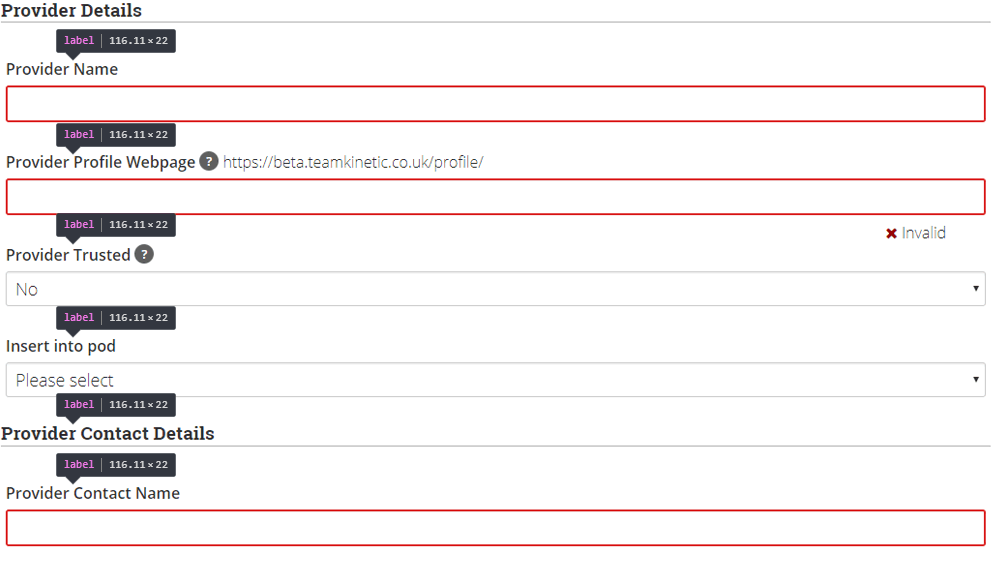
For screen reader users it is important that the context and purpose of all form elements, like text boxes, checkboxes and buttons is clear from the element itself. It is easy for a visual user to tell which question a form element belongs to as it will be group visually, or perhaps via certain colours, on the screen, but will not be apparent to a screen reader user.
Example form showing the correctly marked up labels for the form elements
We have redesigned all the volunteer forms to make sure that the extra context required for screen reader users is included. We achieve this through judicious use of the LABEL tag for describing form elements, by grouping associated elements in a fieldset with a legend and by improving the quality of link and button text by included hidden text that only screen readers see.
Extra Screen Reader Context
Using special styles, it is possible to hide text from visual users but expose it to screen reader users. This is great for adding additional context to buttons and actions that make sense visually but are indistinguishable for screen reader users.
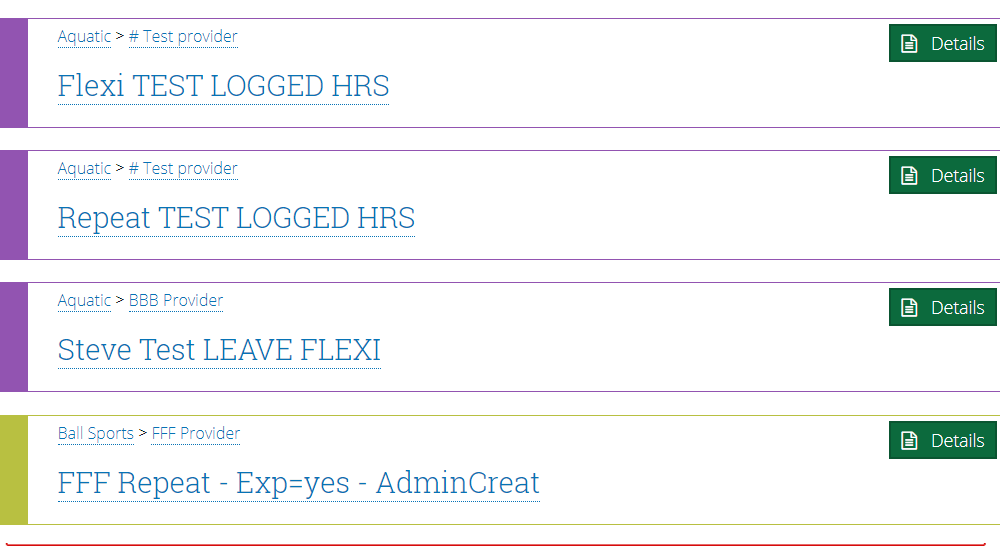
Imagine a long list of say opportunities, each with a button/link that says ‘More Details’ that you might encounter on the search page. It’s easy for a visual user to match the same identical button or link with the context of the opportunity you are currently looking at but not for a screen reader that will just list a long set of identical buttons.
Identical buttons that are easy to associate with the opportunity visually, but not so for a screen reader
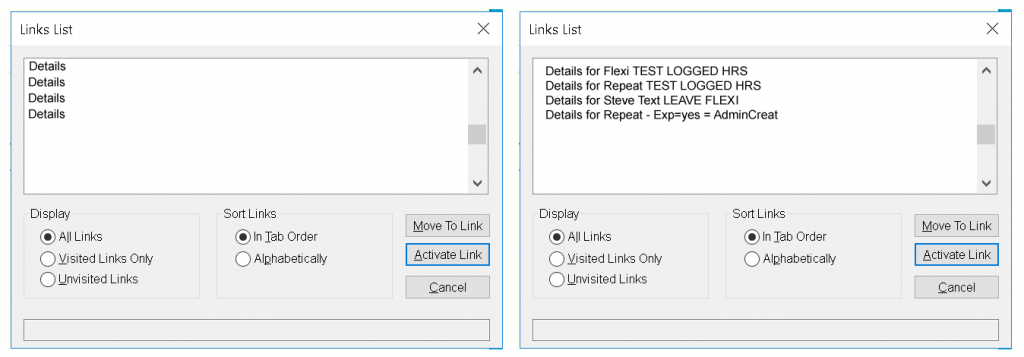
The addition of the contextual text means a screen reader user knows, in this case, which opportunity is linked to which button.
The appearance to a screen reader of the repeated buttons without and with added contextual text
What Next ?
Most of the work for this release has been focused on the volunteer’s portal, with some global changes, like the accessible menu applied across the application.
We will be auditing all the provider pages to perform the same changes as above and finally onto the administrator pages.
We envisage that we will be constantly improving accessibility as best practise evolves and we discover new areas that are not optimised for assistive technology users. If you are such a user we would love to hear your experiences and suggestions.