Category: Volunteer Management Page 1 of 13

TeamKinetic has over a decade of experience working in the volunteer management sector. In these blogs we offer our insight and hope to shed light on new tips for volunteer managers everywhere.

With a main focus on digital solutions, we’ll take you through best-practice advice for volunteer management and operating in the third sector as a whole.

Moving Beyond a Transactional Relationship with Volunteers

In the world of volunteer management, saying “thank you” is more than just good manners; it is a fundamental strategic tool. Research shows that while volunteers are rooted in altruism, they have a deeply human need to feel seen and valued. In fact, the absence of recognition is often more noticeable than its presence; volunteers may not seek constant praise, but they certainly notice when their efforts are taken for granted.

Effective recognition is the “social currency” that fuels a healthy volunteer programme. By acknowledging a volunteer’s time and emotional labour, you move from a transactional relationship to a psychological contract based on mutual respect and shared purpose.

Crafting the Perfect Message: The “Ice Cream Sundae” Approach

To move beyond “cookie-cutter” feedback, we recommend thinking of your feedback structure like an ice cream sundae.

…We promise it makes sense:
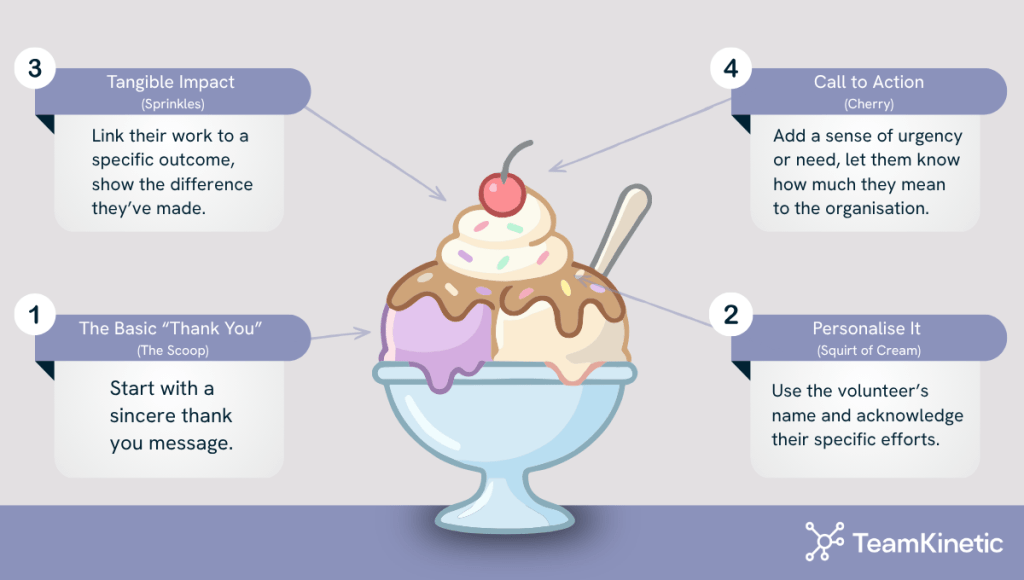
  • The Scoop of Ice Cream – The Basic Thank You
    Start with a sincere “Thank you”.
  • A Squirt of Cream – Personalise It
    Use the volunteer’s name and acknowledge their specific effort. For example: “Marjorie, you were absolutely great today”.
  • Some Sprinkles – Tangible Impact
    Link their work to a specific outcome. Instead of a general “thanks for your help,” try: “You made such a difference to the Rivers Cleanup Team today by clearing that difficult stretch of the bank”.
  • The Cherry on Top – The Call to Action with Scarcity
    Make them feel indispensable. Add a sense of urgency or need: “Without you, we can’t achieve this. We really want you back with us next Tuesday”.

The Science of Recognition: Nudge Theory and Behavioural Economics

Why does this specific wording work? It leverages powerful principles from nudge theory and behavioural economics:

Dopamine Hits

Recognition triggers a dopamine release in the brain, creating a positive feedback loop that makes the volunteer want to repeat the behaviour.

Loss Aversion

By wording your message to say, “Without you, we can’t do this,” you tap into loss aversion (the psychological principle that people feel the pain of a loss more than the joy of a gain). If they don’t return, they aren’t just “not volunteering”; they are “losing” the chance to make a unique impact that only they can provide.

Reciprocity

When a manager provides immediate, high-quality recognition, it triggers the rule of reciprocity, making the volunteer more likely to want to give back by returning for another session.

Feedback Loops

The TeamKinetic Thumbs UP feature provides immediate recognition, which is far more effective at reinforcing behaviour than a distant annual awards ceremony. This “micro-recognition” builds daily morale and fosters a pervasive culture of appreciation.

Why Low-Level Recognition Matters

Investing in regular, low-level recognition, like a quick thumbs up, is a strategic investment in sustainability. Evidence from NCVO’s Time Well Spent research indicates a direct link between feeling recognised and being satisfied. Satisfaction is the primary driver of retention; while 90% of very satisfied volunteers say they are likely to continue, that number drops to just 26% for those who are dissatisfied.

For younger volunteers (aged 18-34), recognition is even more critical, yet they often report feeling the least recognised. By using digital tools to provide frequent, impact-led feedback, you can bridge this gap and build a stronger, more committed volunteer community.


Find TeamKinetic elsewhere:
Volunteers’ Week: Why “Thank You” Matters More Than You Think

Guest blog for Volunteers’ Week, written by Ruth Buchanan Leonard

Every year, Volunteers’ Week invites us to pause — to look up from the processes of delivery management and remember that volunteering is, at its heart, a human act. And that gift of humanity deserves to be acknowledged.

But thanking volunteers shouldn’t be a ritual we perform once a year. It’s in the ongoing practice of noticing and showing appreciation. A way of tending to the relationships that make volunteer involvement possible.

And like all relational work, it’s more complex — and more powerful — than it first appears.

As I’ve written elsewhere: “Everyone likes to be appreciated and recognised for what they’ve done. This doesn’t mean that people are consciously looking for thanks; rather, that it becomes noticed if it’s never given.” That, to me, is the essence of meaningful recognition. Volunteers don’t volunteer for thanks — but they do leave when they don’t feel seen.

It’s tempting to think that the more extravagant the reward, the more appreciated volunteers will feel. But research — and experience — tell us the opposite. Too much or too big a reward can make people uncomfortable, or even create competition where none is needed. And of course, when we’re thinking about how to show our thanks, we need to be aware of Inland Revenue implications: giving cash (other than for out-of-pocket expenses), vouchers or setting up the expectation of regular gifts can blur the legal boundary between volunteer and employee. So it’s worth considering how you want to show your appreciation without putting volunteers or organisations at risk.

A thank you is relational. A reward can be transactional. Volunteers give their time because what they do matters. When we respond on set occasions or with grand gestures, we risk changing the meaning of their contribution. It could imply that volunteering is being “paid”, just in a different currency.

What volunteers want is to know that what they did made a difference. Sometimes the most powerful thank you is a quiet word when they’ve finished their shift, a handwritten note, or a moment of eye contact that says, “I saw that, and it mattered.” Opportunities to be heard and be involved in building the future are also valuable ways of showing people they are recognised as being important. Small, regular appreciation builds trust and belonging far more effectively than any annual celebration – important and fun as these may be.

And recognition is never a one-size-fits-all approach. As well as individual differences, there may be expectations of what feels like recognition based on age or background. I had a recent conversation with a younger volunteer about how students love a tote bag, for example. Some people love a public thank you; others would rather the floor open up beneath them than be singled out. Your role is not to assume how people want to be thanked, but to notice, to ask, and to be ready to adapt your plans.

Volunteers stay where they feel welcomed, supported and appreciated. They leave when they feel invisible. Silence and not having contribution noticed, more than anything, turns people away.

So, this Volunteers’ Week, say thank you and celebrate what volunteering brings. Say it often. Say it genuinely. Say it in ways that respect the volunteer’s agency – and plan how to make this ‘thanks’ habitual. Because volunteering practice is built on relationships, reflection and responsiveness. Recognition is one of the simplest—and most powerful—ways to live those values.

If you want to reflect more on ways to thank volunteers and volunteer involvement more widely, this upcoming coaching programme from our friend Tobi Johnson may help. Learn more here: https://volpro.mykajabi.com/a/2148280246/zNVTAr8m 

As a special offer for TeamKinetic members, use code RUTH to get 15% off.

I’ll be offering complementary drop-in webinars throughout the course, so email me at ruth@teamkinetic.co.uk if you want to be involved. 

How you can Reward your Volunteers with Virtual Badges

Volunteers’ Week is just around the corner! With that in mind, how do you currently recognise your volunteers’ contributions? If you’re looking to improve your volunteer engagement, TeamKinetic’s versatile badge system is a great way to reward and recognise volunteers, validate their training and skills and guide them towards the most suitable roles. 

Badges and reward pathways introduce gamification to volunteering, making it a driving force in volunteer retention. Using automated reward pathways ensures that no milestone is missed and volunteers are recognised at each stage of their journey. 

Different Badges in TeamKinetic:

Achievement Badges 

These badges provide a linear reward pathway, allowing the volunteer dashboard to become a Trophy Case.

Once a badge is earned, it’s featured prominently on the volunteers’ dashboard and is downloadable via their achievement record, which they can take onto future opportunities.

Customisation is the key here! Whilst TeamKinetic provides a default set of badges, you can redesign these badges, change their name and alter the hour count required to achieve each level.

Introducing a VMS shouldn’t mean a personal touch is lost, and badges are a great way to add your own flair.

If you’re stuck for ideas, think of any emblems associated with your organisation and incorporate them into the design!

Award Badges

Custom Award Badges allow you to get really creative with how you recognise volunteers.

Here you can design and upload Open Badges to record details around skills and achievements. Or you can upload your own designs to recognise Long Service, Volunteer of the month or other awards specific to your organisation.

Similar to Achievement Badges, Award Badges also appear on the volunteers’ dashboard and form part of their achievement record.

As part of the celebrations, we’ve created this custom TeamKinetic 2026 Volunteers’ Week Recognition Badge that anyone can use to recognise their volunteers between the 1st and 7th June.

Creating a custom badge like this from your organisation is a super simple way to show your volunteers that they’re appreciated.

Opportunity Badges: 

Badges are not only given to people; they are also used as fully customisable visual indicators attached to specific volunteering roles.

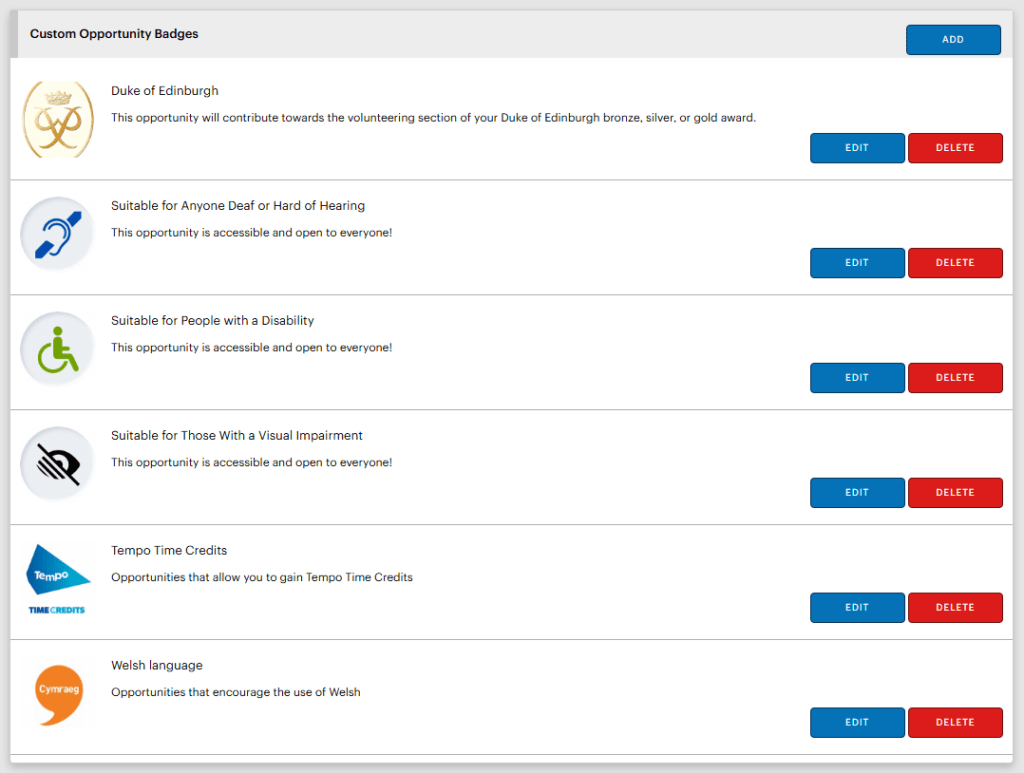
Administrators can tag opportunities with badges such as “Great for Corporate Teams”, “Micro Volunteering”, or “Suitable for Duke of Edinburgh Awards.” These visual cues allow volunteers to search for opportunities more fluidly and select their preferences more easily.

The TeamKinetic badge system helps you reward every effort, from major milestones to micro-volunteering tasks.

We challenge you to get inventive with your badge designs and reward pathways for Volunteers Week. The more personal and specific the recognition, the more valued your volunteers will feel!


Learn more about Reward and Recognition

On Wednesday 3rd June, Steve will be leading a Masterclass on volunteer reward and recognition within TeamKinetic. We’ll be showing you all the top tips to get you into the swing of things with Volunteers’ Week!

TeamKinetic users can book now for free via their system: Help & Support → Masterclasses & Training.

Digital in Volunteering Community of Practice

The CoP also has a lot of great resources for volunteer managers looking for tips on reward and recognition. A webinar back in September 2025 took a deep dive into all about the different ways you can say thank you to your volunteers. We heard from speakers from Volunteer Glasgow, Tempo, and Tickets for Good. You can read all about this session and watch the recording back here (membership is completely free).

The Digital in Volunteering Toolkit also contains a whole chapter about reward and recognition, which you can also access here.

Access Resources for Volunteers Week

The official Volunteers Week website has an array of great resources. Including materials for engaging with the campaign online, hosting events (both virtual and in person), top tips, and much more. Access these here.

The Volunteers’ Week Padlet

They’ve created a Padlet – a collaborative online pinboard where you can share and explore inspiring stories, photos, and messages of appreciation related to volunteering.

Whether you’re highlighting your own volunteering journey or thanking someone who’s made a difference, the Padlet is the perfect space to celebrate the incredible impact volunteers make every day.

Share your experiences now. Help them build a vibrant wall of gratitude and celebration!


Find TeamKinetic on socials:

Guest Masterclass series with Paddy Hanrahan: From stories to evidence: practical impact for volunteer-led organisations.

Volunteer managers often know the difference their organisation makes — but struggle to evidence it in ways that funders, trustees, and partners trust.

This practical masterclass explores how volunteer-led, community organisations can move from stories and activity counts to clear, credible evidence of impact — without over-complicating things or becoming an evaluation expert.

Drawing on real examples from community organisations, the session will show how better impact evidence can strengthen funding applications, increase confidence in conversations with partners, and support smarter decisions internally.

The focus is on practical, proportionate approaches that work for small and medium-sized organisations where time and capacity are limited.

Who are Patchworks?

We help community organisations (local VCSE) to produce independent evidence of their impact.

Using a process called Covaluation – coproduced evaluation – we codesign outcomes around how you work, help you collect the data needed to prove them, and produce a brilliant report that will help you improve services and raise more funds.

Most of the organisations we work with have volunteers at their core, and measuring the social value of their contribution is crucial. 

PatchWorks is the creation of Paddy Hanrahan, an experienced leader in the UK volunteering space. 

Visit Patchworks’ website.

Connect with Paddy on LinkedIn.


TeamKinetic users can join via their system by going to Help & Support → Masterclasses & Training.

Not a TeamKinetic user? No problem. You can still join us for this Masterclass via our Eventbrite page! Tickets are free for everyone.

The Heart of Your Programme: Volunteer Reward and Recognition

We all know that a simple “thank you” goes a long way, but in the busy world we live in, it’s easy for volunteer reward and recognition to slip to the bottom of the to-do list. However, acknowledging the time, skills, and emotional energy your volunteers give is actually the backbone of a healthy and sustainable programme.

By acknowledging the time, skills, and emotional energy volunteers give, you’re doing more than just being polite; you’re making a strategic investment in your organisation’s future.

Why recognition matters more than you might think

Most people volunteer for altruistic reasons. They want to help or feel a personal connection to a cause. However, as Ruth Leonard and Jurgen Grotz note, while people aren’t usually hunting for thanks, they certainly notice if it’s never given!

‘Most of us like to be appreciated and recognised for what we’ve done. This doesn’t mean that people are consciously looking for thanks, rather that it becomes noticed if it’s never given. Probably, the most important thing that can be done in order to continue a relationship with volunteers is to make sure they know that they and what they do are valued.’

Grotz & Leonard (2022)

Focusing on appreciation isn’t just a “nice” thing to do; it makes great business sense, too. It leads to:

  • Lower Turnover: Volunteers stay longer, which means you spend less time and money on constant recruitment and onboarding. NCVO’s Time Well Spent research found that 81% of satisfied volunteers plan to continue over the next year, compared to just 26% of dissatisfied ones.
  • A Supportive Community: When you recognise volunteers, they start to recognise each other, creating a friendly, reciprocal environment.
  • Better Results: High engagement usually leads to better outcomes for the people or communities you serve.
  • Attract Younger Talent: Recognition is especially important to younger volunteers. While 40% of all volunteers value it, that number jumps to 49% for those aged 18–24.

Simple Ways to Say Thanks

You don’t need a massive budget to make someone feel valued. In fact, research shows that the most popular form of recognition is just a verbal or written thank you.

  • Personalised Notes: A quick email or a handwritten letter can mean the world.
  • Validation from the Top: Having a thank-you note come from a senior leader or the head of your organisation can make a volunteer feel their work is being noticed by the whole charity, not just their immediate supervisor.
  • Tangible Proof: Certificates remain a classic and effective way to celebrate a job well done.

Keeping it Legal: The Tax Bit

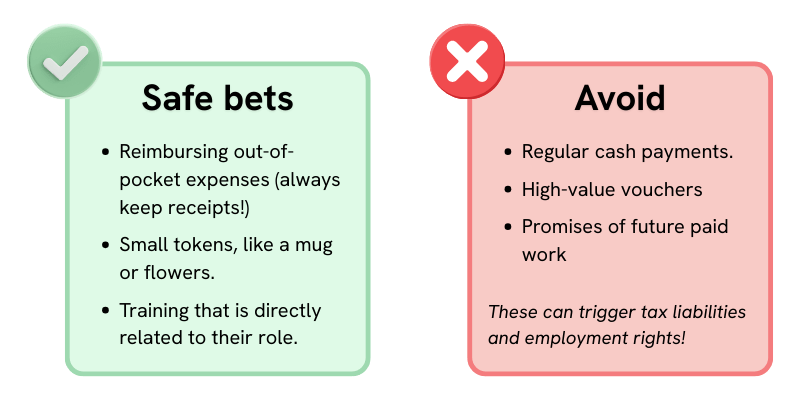
Before you start handing out gifts, it’s important to keep HMRC in mind. To avoid accidentally creating an employment relationship, rewards should be occasional, low-value, and unexpected.

An image showing a green box with what are considered safe bets. These include: Reimbursing out-of-pocket expenses (always keep receipts!), small tokens like a mug or flowers, and training that is directly related to their role.

It also has a red box with things to avoid. Including: Regular cash payments, high-value vouchers, or promises of future paid work, as these can trigger tax liabilities and employment rights.

Making it Easier with TeamKinetic

If you use the TeamKinetic system, there are some built-in tools that can help you automate these “thank yous” so they don’t get forgotten. If you use other tools, you can still use these ideas as a blueprint for your own recognition strategy.

The “Ice Cream Sundae” of Feedback

We love this metaphor for giving great feedback. Rather than a “cookie-cutter” message, try layering your appreciation like a sundae:

  • The First Scoop: The base—a simple “thank you” for their time.
  • The Sprinkles: A personal detail about something they did well (e.g., “You were so helpful with the registration desk today!”).
  • The Cherry on Top: A warm invitation to come back again soon.

Milestone Badges (Gamification)

You can create Custom Award Badges for anything you like—from “Volunteer of the Month” to “Length of Service” milestones. Some organisations get creative, using nature-themed badges where a new volunteer starts as a “Seed” and grows into a “Veteran Tree” over time. These digital badges appear on the volunteer’s profile as a permanent record of what they’ve achieved.

HourTrades: Exchanging Time for Perks

HourTrades allow volunteers to “swap” the hours they’ve logged for small rewards.

  • What to offer: This could be some branded kit, like t-shirts or mugs, or even better, training opportunities like a first aid course or a coaching qualification.
  • How it works: You set the “price” (e.g. 10 hours for a t-shirt), and the system handles the request for you.

High-Value Perks at No Cost

Through our integrations, you can offer some pretty cool perks without spending a penny of your own budget:

  • Tickets for Good
    Gives volunteers who have logged a set amount of hours access to free/discounted tickets for live music, comedy, and sports events.
  • Tempo Time Credits
    A national scheme where volunteers earn credits in exchange for volunteering hours. They can then spend credits on various experiences.

Are you a visual learner?

In this recent TeamKinetic masterclass, Rolf went through some of the most effective way to thank you volunteers. He shows you how to use TeamKinetic to effectively reward and recognise your volunteers.

Final Thoughts

At the end of the day, you don’t need any fancy methods of reward and recognition. You just need to be consistent and sincere. Whether you’re sending quick feedback after they’ve completed an opportunity or setting up a badge system for long-term achievements, the goal is to make sure your volunteers know that what they do truly matters.

You can access a full training guide for reward and recognition here.

If you’re a TeamKinetic user, why not jump into your super admin menu today and try creating your own Achievement Badges or add some HourTrade vouchers? If you aren’t using the system yet, why not contact us to see how we can help you.

What’s next?

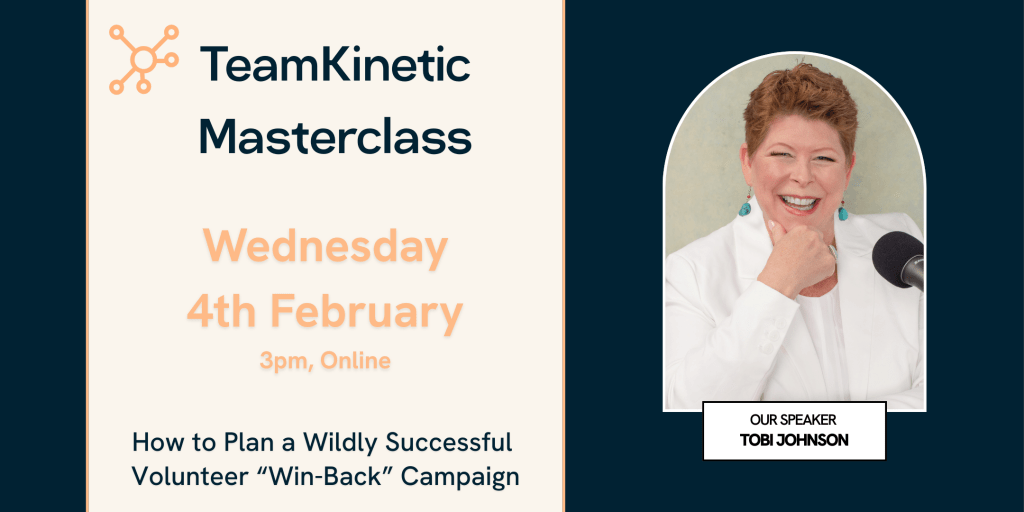
Next up in our Masterclass series, we’re joined by Tobi Johnson. Tobi is an expert in all things volunteer management and has been sharing her wisdom via VolunteerPro since 2015. She’s joining us to discuss how to re-engage lost volunteers. Or, in her words, “How to Plan a Wildly Successful Volunteer “Win-Back” Campaign”!

TeamKinetic users can book now via their system (Help & Support → Masterclasses & Training), everyone else can use this Eventbrite page to reserve their place. We think this will be a popular one so get tickets while you can!

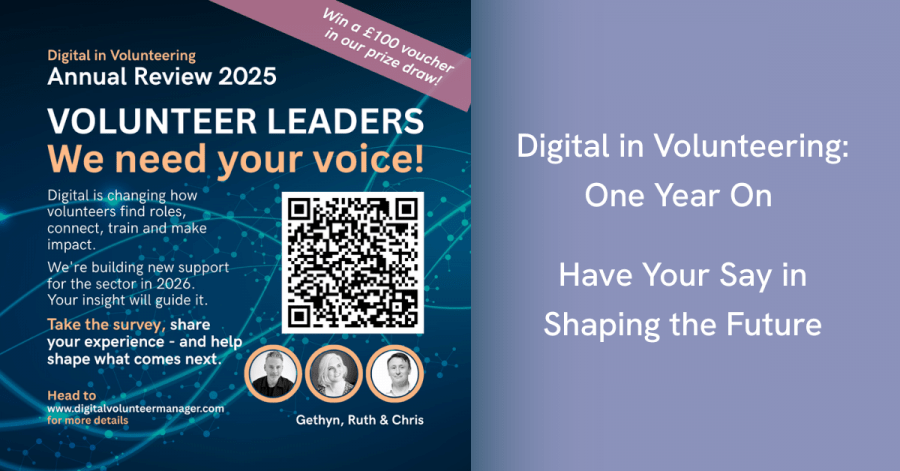
Digital in Volunteering: One Year On – Have Your Say in Shaping the Future

This month marks one year since the launch of the Digital in Volunteering initiative – a sector-wide effort to understand how digital tools are transforming volunteering. It also serves to help volunteer managers build the confidence, capability, and connections they need to thrive.

From recruitment platforms and online training tools to CRM systems and new ways of keeping volunteers engaged, one thing is clear: digital isn’t just an add-on anymore. It’s central to how volunteering works today.

Over the past year, the initiative has grown rapidly across the UK voluntary sector. While digital in volunteering continues to evolve, we’re already seeing real innovation, shared learning, and a growing appetite to build on this progress.

What’s been achieved so far

The vision behind Digital in Volunteering is simple. To empower volunteer managers with the tools, knowledge, and peer support they need to use digital confidently and purposefully.

The Digital in Volunteering Toolkit

A practical resource designed to help volunteer managers adopt digital approaches with confidence. Whether you’re starting small or scaling up. From assessing your organisation’s digital maturity to embedding inclusive practice, the Toolkit has already supported hundreds of people across the sector.

Access the Toolkit here.

The Digital in Volunteering Community of Practice

Now more than 300 volunteer managers strong, the Community is a space for sharing ideas, learning together, and supporting one another on the digital journey. Built by volunteer managers, for volunteer managers, it’s a collaborative network that’s only just getting started.

Through webinars, discussions, and case studies, one clear message has emerged: the future of digital in volunteering will be shaped by practice, not platforms.

Join the Community of Practice.

Help shape what comes next

As the initiative looks ahead to 2026, the team wants to understand what volunteer managers need most. What’s working? What’s missing? And where is more support needed?

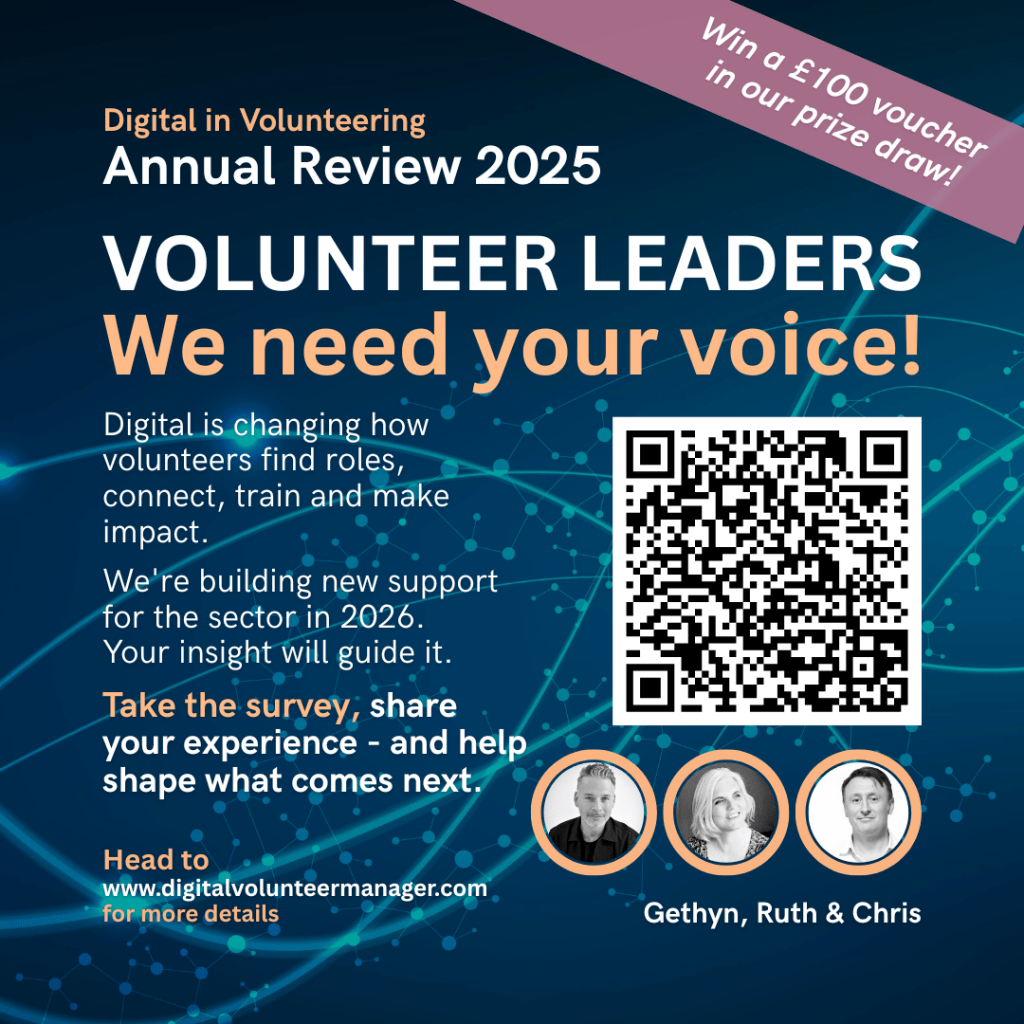
You can help by completing the 2025 Digital in Volunteering Survey. It takes just a few minutes, and your insights will directly shape the support, learning, and resources offered next year.

Take the survey here: https://forms.gle/FA4LdJpqtQRwfyJe8

Everyone who takes part will be entered into a prize draw to win a £100 voucher.

Your experience matters. Your contribution will help strengthen volunteering across the UK.

What’s next?

The initiative will continue to grow with the sector, focusing on:

  • New Toolkit content shaped by your feedback
  • More examples of digital practice from peers
  • Support on emerging topics such as AI and accessibility
  • Events and discussions led by practitioners, not tech vendors

This isn’t about digital for digital’s sake. It’s about helping volunteering thrive in a connected world.

Get involved

If you’re passionate about how digital can make volunteering more inclusive and impactful, here’s how to take part:

Thank you to everyone who’s contributed so far and to those joining the journey now. Together, we can continue to unlock digital’s potential for volunteering, one practical step at a time.

Measuring the Impact of Volunteers: A Practical Guide

Volunteers bring so much to organisations. They strengthen communities, boost well-being, and often change lives. Including their own!

However, capturing that impact can feel daunting. Especially when funders want neat numbers, but volunteers deserve recognition that goes deeper than statistics.

The good news? There isn’t just one way to measure impact. At our 2025 Conference, we heard from Joanne Irvine and Will Watt. They’re two leading voices in this area who are approaching volunteer impact from slightly different angles.

Joanne’s work shows how involving volunteers in the process of collecting qualitative data can uncover stories that statistics alone can’t capture. Whereas Will is well-experienced in turning the social and economic value of volunteering into hard data.

By combining storytelling methods with economic evaluation, volunteer managers can build reports that tick boxes for stakeholders while showing the human side too. Here’s how…


Go Beyond Hours Logged

Traditional measures, like the number of hours given or the cost of replacing volunteers with paid staff, are a useful starting point. But they only capture one part of the picture.

  • Economic value: Tools like social value calculators can estimate the financial worth of volunteering in terms of improved well-being, health, and community services supported.

    Will Watt’s company, State of Life, has developed a simple guide to social impact to help you start thinking about calculating your programme’s social value.
  • Social impact: Data shows that weekly volunteering boosts life satisfaction, reduces loneliness, and builds trust in communities.

    Joanne’s work supports highlighting the human impact behind the numbers. It brings meaning, emotion, and context to outcomes. And by doing so, it supports fairer policies, stronger funding cases, and a shift toward valuing social, environmental, and community well-being alongside economic measures.

Think of hours logged as the foundation, layering in well-being and social impact creates a full story around the data.

Capture Stories and Lived Experiences

Numbers impress funders, but stories move people. Volunteers often describe benefits like:

  • Increased confidence
  • New friendships
  • A stronger sense of purpose
  • Better physical and mental health

Simple methods like open-ended questions in feedback forms, sticker voting at events, or even casual conversations can reveal these outcomes. Sharing them alongside statistics creates a fuller, more relatable picture.

See a snippet of Joanne’s work with Glasgow Life below, and read the full report via this link.

Involve Volunteers in Evaluation

When volunteers are invited to help shape how impact is measured, they feel more valued and engaged. This participatory approach:

  • Deepens trust and retention
  • Uncovers hidden benefits managers may miss
  • Helps align evaluation with what truly matters to volunteers

It doesn’t need to be complicated. Something as simple as asking volunteers what success looks like to them can make a difference.

Recognise What Volunteers Want Most

Research into volunteer motivations highlights six recurring themes, captured in the GIVERS framework:

  • Growth: opportunities to learn and develop skills
  • Impact: evidence that their work makes a difference
  • Voice: inclusive language and invitations to help, not just “volunteer recruitment”
  • Experience: enjoyable, easy-to-access opportunities
  • Recognition: simple thanks and public appreciation
  • Social connection: friendships, networks, and reduced loneliness

Designing your evaluation around these motivators ensures you’re measuring (and delivering) what matters most.

Build Reports That Speak to Everyone

Different stakeholders care about different things. A strong impact report should combine:

  • Statistics for funders and policymakers: such as the economic value of well-being improvements or the cost saved to public services.
  • Stories for communities and volunteers: quotes, case studies, and personal accounts that show the human side of volunteering.
  • Practical context: explaining what those numbers and stories mean in real-world terms (e.g. “One volunteer enables nine others to play sport”).

Make your reporting credible, relatable, and actionable with this blended approach.


Final Thoughts

Measuring the impact of volunteers doesn’t have to be a choice between numbers and stories. By blending economic evaluation with qualitative, participatory methods, you can create reports that satisfy funders, inspire communities, and, most importantly, show volunteers how much they matter.

Because the true value of volunteering isn’t just in what people give, it’s also in what they gain.

Find out more

Joanne Irvine

If you want to find out more about Joanne’s work and this approach to measuring the impact of volunteers, you can check out this paper she worked on with Ruth Leonard. You can also see her slides from the Conference here.

Will Watt

Visit State of Life’s website to see how Will might be able to help you measure the social value of your work. You can also see his conference slides here.


And, as always, you can find TeamKinetic via our links below:

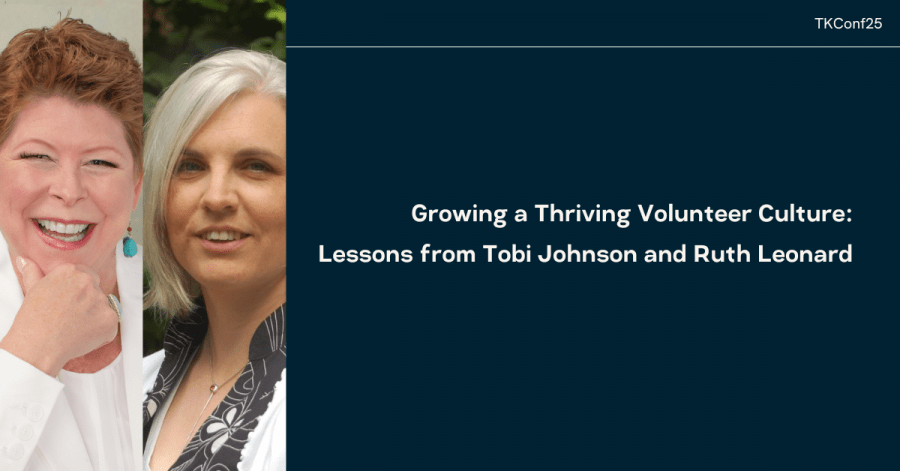
Growing a Thriving Volunteer Culture: Lessons from Tobi Johnson and Ruth Leonard

What does volunteer management have in common with gardening? According to experts Tobi Johnson and Ruth Leonard, when it comes to creating a thriving volunteer culture, quite a lot!

In their session at our latest conference, they invited everyone to rethink how they nurture volunteers, drawing powerful parallels between cultivating healthy soil and building supportive environments where people can thrive.

Together, they explore how thoughtful planning, experimentation, and care can transform a volunteer programme into a living, self-sustaining ecosystem.

Planting the Right Seeds

Every garden begins with planting. For volunteer managers, that means thinking carefully about how you bring new people into your organisation. Just like seeds, each volunteer holds unique potential. With the right support at the right time, they can grow in unexpected and valuable directions.

Key takeaway: Recruitment isn’t only about filling gaps. It’s about creating the right conditions for volunteers to thrive in ways that support both their own motivations and your organisation’s mission.

Nurturing Growth with Care and Consistency

A healthy garden needs consistent watering and care. And so do your volunteers! Tobi and Ruth highlighted the importance of communication, recognition, and trust as the “nutrients” that sustain long-term engagement. Volunteers who feel valued and supported are far more likely to stay and contribute meaningfully.

Key takeaway: Build regular check-ins and feedback into your volunteer programme. Even simple recognition, like saying thank you and sharing achievements, keeps your volunteer culture resilient.

Embracing Experimentation

Not every plant grows where you expect it to. The same applies to volunteering. Given the space to experiment, volunteers often uncover strengths or skills they didn’t even know they had.

Key takeaway: Flexibility is powerful. Allow volunteers to try different roles or projects, and be open to evolving opportunities. This can bring fresh energy and reveal hidden talents.

Diversity Builds Strength

Just as biodiversity makes a garden more resilient, diversity enriches volunteer culture. Different perspectives, experiences, and skills create stronger, more adaptable teams.

Key takeaway: Actively nurture diversity and inclusivity. A broad mix of volunteers doesn’t just reflect your community, it strengthens your organisation’s ability to grow and respond to new challenges.

Protecting and Celebrating the Harvest

Gardeners know the importance of protecting their crops and celebrating the harvest. Volunteer managers should do the same. Protecting your culture means ensuring contributions remain meaningful and aligned with your purpose, while celebration reinforces a sense of shared achievement.

Key takeaway: Don’t only measure outputs, celebrate outcomes. Share stories, recognise milestones, and show volunteers the bigger picture they’re helping to create.


Final Thoughts

Tobi and Ruth’s session was a great reminder that volunteer management isn’t just a process, it’s something you nurture. With a bit of planning, care, creativity, and a focus on diversity, volunteer managers can grow a vibrant culture that keeps thriving year after year. Like a garden!

At TeamKinetic, we know how important your role is, and we’re here to give you the tools and support you need to grow your own flourishing ‘garden’ of volunteers.

Get in touch today

Unlocking the Power of Volunteer Management: The Benefits of Joining the Association of Volunteer Managers (AVM)

Volunteer management is at the heart of many organisations, from charities to community groups, and effective leadership is crucial to ensuring both the individual and the organisation feel the full benefits. The Association of Volunteer Managers (AVM) connects, develops and empowers you to lead, support and manage volunteers effectively by offering a wealth of resources, learning and development and networking opportunities.

Here’s a closer look at the membership benefits that make AVM an invaluable asset for volunteer managers across the UK.

1. Development and Learning Opportunities

AVM places a strong emphasis on continuous learning and development. Members gain access to a variety of events designed to enhance skills and knowledge:

  • Discounted Access to Events and Conference: Members receive discounts on public peer learning events and the annual conference, ensuring they can engage with leading experts and stay updated on best practices in volunteer management.
  • Member-Only Events: Exclusive events such as member forums and free think-ins, these sessions provide a platform for in-depth discussions and learning among peers.

2. Mentoring and Networking

Building connections and learning from others’ experiences is vital in volunteer management:

  • Mentoring Programme: AVM’s mentoring initiative pairs experienced professionals with those seeking guidance, fostering personal and professional growth. This programme is exclusive to AVM members and opens twice a year.
  • AVM Connect: A facilitated networking scheme that matches members with peers to share experiences, challenges, and solutions, helping to build a supportive community. This is also exclusive to AVM members and runs 5-6 times a year.
  • Face-to-face meetings: AVM has established regional networking groups across the UK to facilitate in-person peer support.

3. Exclusive Resources and Content

Members have access to a treasure trove of resources to support their work:

  • AVM Replay: Members can access a series of short webcasts and recordings from past events, offering insights into innovative practices and thought leadership in the sector.

4. Advocacy and Representation

AVM serves as a collective voice for volunteer managers, advocating for the recognition and development of the profession:

  • Representation: Through its activities, AVM works to raise the profile of volunteer management and influence policy and practice in the sector.

Membership Options

Recognising the diverse nature of volunteer management, AVM offers flexible membership fees:

  • Individual Membership: Annual fees are based on salary, with reduced rates for those managing volunteers in a voluntary capacity.
  • Organisational Membership: Organisations can choose the Learning & Development package that best fits their size, ensuring all staff and volunteers benefit from AVM’s offerings.

Joining the Association of Volunteer Managers provides a comprehensive support system for those dedicated to leading and developing volunteer programmes. From professional development and networking to exclusive resources and advocacy, AVM equips its members with the tools and community needed to excel in volunteer management. Whether you’re an individual professional or part of an organisation, AVM offers a pathway to enhance your impact and contribute to the growth of volunteering across the UK.

Join AVM today to feel the full benefit of connecting with fellow leaders of volunteering to make change happen together.


You can find TeamKinetic on social media and listen to our podcast:

Twitter       Facebook       LinkedIn       YouTube       Instagram       Podcast


Have you enjoyed using TeamKinetic? If you could leave us a review, we’d really appreciate it!

Empowering Volunteer Managers: The Digital in Volunteering Toolkit

On 5th December, we celebrated the launch of the Digital in Volunteering Toolkit, developed by TeamKinetic, Gethyn Williams, and the Association of Volunteer Managers (AVM).

This toolkit, designed with input from experts in volunteer management and technology, aims to help organisations navigate the ever-changing digital landscape with confidence.

You can download the Toolkit now, here.

Here’s a recap of the event and a look at what’s next for volunteer managers:


A Dynamic Panel

We kicked things off by discussing how to use technology in the most meaningful way. It’s not about jumping on the latest tech trends just because they’re shiny, but figuring out how digital tools can genuinely help tackle challenges.

This led to the idea of creating the toolkit – something that started as a small project but grew into a game-changer over the past year.

The online launch event gave us an excuse to bring together a fantastic panel of speakers to explore the opportunities and challenges of adopting digital tools in volunteer management.

Hosted by Ruth Leonard (AVM), the panel featured:

  • Chris Martin (TeamKinetic)
  • Alan Stevenson (Volunteer Scotland)
  • Maddy Desforges (NAVCA)

During the panel session, Maddy shared her struggle with CRMs. This probably hit home for a lot of people at the launch. It’s that classic problem of spending so much time putting data in, but being unable to pull out what you need when needed. Finding that sweet spot of efficiency and usability is still a work in progress for many of us. The Toolkit hopes to help you solve issues like that.

They also talked about the value of having ‘critical friends’. These are people who tell you when you’re off track and help you engage better with volunteers. It’s not just about having the right systems in place; it’s also about building relationships and keeping volunteers on the journey with you.


Exploring the Toolkit

After the panel, Gethyn Williams guided attendees through the toolkit’s contents. Packed with practical advice and insights, the toolkit is a resource to help organisations:

  • Assess their digital needs
  • Identify suitable tools and solutions
  • Overcome common barriers to adoption

If you’ve not yet accessed the toolkit, it’s available to download for free:

The toolkit is a way to make tackling volunteer challenges less daunting. Think of it as breaking down a huge task into bite-sized pieces. It will help organisations get started without feeling overwhelmed. It looks at digital adoption through three lenses: scale, efficiency, and experience. Whether it’s about reaching more people, streamlining internal processes, or creating a standout volunteer experience, the toolkit uses these principles to guide organisations.

Bonus: it can even help build a strong business case for your volunteer programs.

We wanted this toolkit to feel different. It’s based on the real-world challenges that volunteer managers face daily. The feedback and iterations over the past year have shaped it into something truly tailored for leaders on the front lines.


Introducing the Community of Practice

The launch event also marked the beginning of a new Community of Practice, designed to create a space for volunteer managers to collaborate, share, and advocate for the role of digital technology in volunteering. You can sign up for the community of practice when you download the toolkit.

What the Community Offers

  • Learning: Peer support and shared knowledge to navigate digital challenges
  • Influence: Mobilising collective voices to shape the market and contribute to national conversations
  • Access: Priority access to Parts 2 and 3 of the toolkit, as well as early notice of training opportunities

Hosted by AVM and supported by TeamKinetic and Gethyn Williams, this vendor-neutral Community of Practice is a unique opportunity to connect with like-minded professionals and drive positive change.


Looking Ahead

What’s next? More conversations!

Podcasting, blogs, and social media will play a big role in keeping the discussion alive, with experts and practitioners sharing insights on volunteering, tech, and everything in between.

As technology continues to evolve, the need for adaptable, innovative solutions in volunteer management has never been greater. The Digital in Volunteering Toolkit and the Community of Practice provide the resources and networks volunteer managers need to thrive in this dynamic environment.

We’re excited about the conversations and collaborations this initiative is going to spark. If you’re passionate about harnessing digital tools to enhance volunteering, we invite you to join us on this journey.

Download the toolkit now and stay tuned for updates and opportunities to engage with the Community of Practice. Together, we can shape the future of volunteer management.


You can find TeamKinetic on social media and listen to our podcast:

Twitter       Facebook       LinkedIn       YouTube       Instagram       Podcast


Have you enjoyed using TeamKinetic? If you could leave us a review on Capterra, we’d really appreciate it!

Page 1 of 13

Powered by WordPress & Theme by Anders Norén