
In the world of volunteer management, saying “thank you” is more than just good manners; it is a fundamental strategic tool. Research shows that while volunteers are rooted in altruism, they have a deeply human need to feel seen and valued. In fact, the absence of recognition is often more noticeable than its presence; volunteers may not seek constant praise, but they certainly notice when their efforts are taken for granted.
Effective recognition is the “social currency” that fuels a healthy volunteer programme. By acknowledging a volunteer’s time and emotional labour, you move from a transactional relationship to a psychological contract based on mutual respect and shared purpose.
Crafting the Perfect Message: The “Ice Cream Sundae” Approach
To move beyond “cookie-cutter” feedback, we recommend thinking of your feedback structure like an ice cream sundae.
…We promise it makes sense:
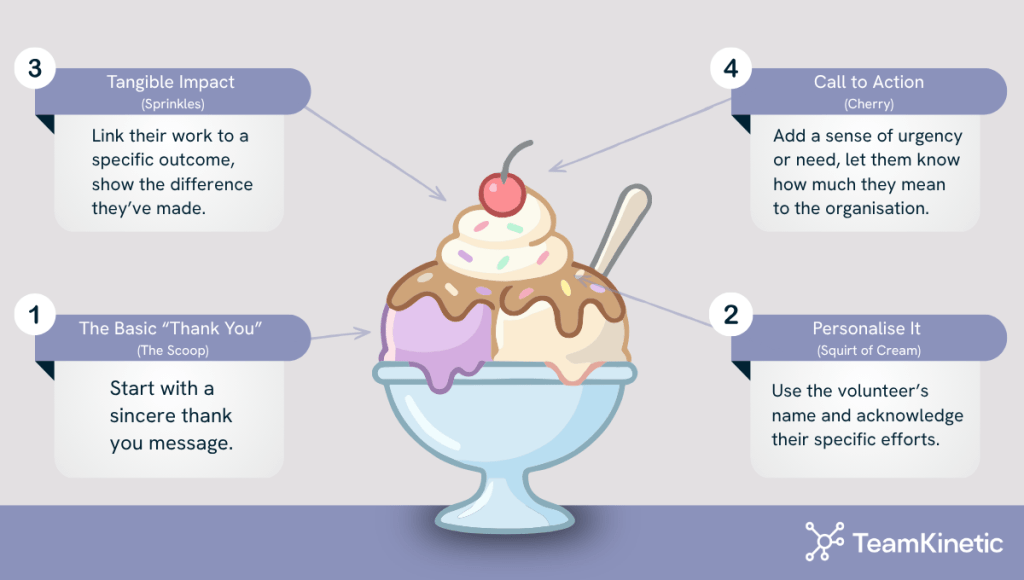
- The Scoop of Ice Cream – The Basic Thank You
Start with a sincere “Thank you”. - A Squirt of Cream – Personalise It
Use the volunteer’s name and acknowledge their specific effort. For example: “Marjorie, you were absolutely great today”. - Some Sprinkles – Tangible Impact
Link their work to a specific outcome. Instead of a general “thanks for your help,” try: “You made such a difference to the Rivers Cleanup Team today by clearing that difficult stretch of the bank”. - The Cherry on Top – The Call to Action with Scarcity
Make them feel indispensable. Add a sense of urgency or need: “Without you, we can’t achieve this. We really want you back with us next Tuesday”.
The Science of Recognition: Nudge Theory and Behavioural Economics
Why does this specific wording work? It leverages powerful principles from nudge theory and behavioural economics:
Dopamine Hits
Recognition triggers a dopamine release in the brain, creating a positive feedback loop that makes the volunteer want to repeat the behaviour.
Loss Aversion
By wording your message to say, “Without you, we can’t do this,” you tap into loss aversion (the psychological principle that people feel the pain of a loss more than the joy of a gain). If they don’t return, they aren’t just “not volunteering”; they are “losing” the chance to make a unique impact that only they can provide.
Reciprocity
When a manager provides immediate, high-quality recognition, it triggers the rule of reciprocity, making the volunteer more likely to want to give back by returning for another session.
Feedback Loops
The TeamKinetic Thumbs UP feature provides immediate recognition, which is far more effective at reinforcing behaviour than a distant annual awards ceremony. This “micro-recognition” builds daily morale and fosters a pervasive culture of appreciation.
Why Low-Level Recognition Matters
Investing in regular, low-level recognition, like a quick thumbs up, is a strategic investment in sustainability. Evidence from NCVO’s Time Well Spent research indicates a direct link between feeling recognised and being satisfied. Satisfaction is the primary driver of retention; while 90% of very satisfied volunteers say they are likely to continue, that number drops to just 26% for those who are dissatisfied.
For younger volunteers (aged 18-34), recognition is even more critical, yet they often report feeling the least recognised. By using digital tools to provide frequent, impact-led feedback, you can bridge this gap and build a stronger, more committed volunteer community.
Find TeamKinetic elsewhere:
Leave a Reply