More than 1 billion people volunteer globally, as you can imagine that is a lot of volunteering hours to be added up. In fact, this is equivalent to 109 million full-time workers. Safe to say that volunteer managers have their work cut out for them, but why do we need so many volunteers?
1. Richness is not what you think
You can spend endless money on watches, clothes and gadgets. But how much have you spent being there for the ones we love and care about the most?
Do possessions make you rich? Well, I don’t have that type of richness. My richness is life forever.
Bob marley
Volunteers are not there for the money, but only to be of assistance to others they can work and connect with. Not because they’re employed to, but because they want to. They put their needs before others without monetary requirements – it’s purely from the heart. Here at TeamKinetic, we have been able to witness millions of logged hours from thousands of volunteers, it’s simply astonishing to see and we hope to see many many more wonderful people engaging with fantastic volunteering opportunities.
2. The greatest gift of all
Volunteers truly grant their greatest gift of all. Time. We’re all constantly caught up in the rat race of busy working lives, sometimes I think a few extra hours in the day would be a blessing.
Volunteers give their time day in, day out. This value can not be quantified or replaced, but it can be valued and respected. We can all agree that without volunteers’ generosity, many services and experiences would be much worse off.
3. Lights in the darkness
Volunteers provide comfort for those who are going through difficult times in their lives. A small light in the darkness can really affect someone in a million different ways. It’s the light that sparks hope that someone cares and is willing to spend time but most importantly listen. Read more about how volunteers are making others feel better about themselves, visit Samaritans and see the true difference being made by volunteers for yourself.
4. Resilience and reliability
Volunteers weave safety nets within various organisations which give organisations a resilient and reliable backbone of support which can help the structure and workflow within many organisations.
Volunteering creates solidarity and connections among people by working together to build resilient communities. At TeamKinetic we know the importance of being able to build and unite people through volunteer management. Management allows volunteers to be able to join and find opportunities easily within communities.
5. Irreplaceable value
We take many things for granted in life, how many of us allow ourselves to sit back and take a moment to appreciate one another?
The same goes for volunteers.
The value a volunteer holds is irreplaceable. Every volunteer is different in their own way. Although volunteers may be completing the same opportunity, each will have characteristics which make them uniquely valuable.
Five seems such a small collection and I assure you, there are many more reasons why we need volunteers. We champion the idea, that our customers and users, to value and respect volunteers more often. They achieve a lot more than we sometimes imagine, they truly are the backbone of many brilliant organisations.
You can find TeamKinetic on social media and listen to our podcast:
Volunteer managers are vital to a number of organisations and do a lot more than you may even realise. Managers should be celebrated all year, not just on the 5th of November. We’d like to say a huge well done to all the volunteer managers we work with and have met; keep up the amazing work!
Importance of volunteering
Let’s go back to basics… Why should we place so much importance on volunteering in the first place?
Well, volunteering has a range of benefits:
It’s good for your mental and physical health.
It connects you to others, allowing you to make friends and improve social skills.
It can advance your career, teaching you valuable job (and life) skills.
It brings fun and fulfilment to your life while letting you give back to your local community.
Even reduces the risk of mortality!
Volunteer Managers
Volunteer managers all across the world help to bring these benefits to people who work with their organisation, making them one of the most important positions at any non-profit. They have to keep volunteers engaged, excited about the work, and productive. It is also important that the volunteer manager thank volunteers for their contributions by any small means possible, being polite can mean a lot to your volunteers.
While the volunteer manager is responsible for rewarding their volunteers, we believe they should be recognized for all their hard work too. What better day to celebrate them on than International Volunteer Managers Day?
Perfect time to say thank you
If you’re a volunteer, work for a non-profit, or just know someone who is a volunteer manager, why not send them a quick message thanking them for all their hard work? And if you’ve come across this blog on any day other than the 5th of November, you can still thank them! We shouldn’t feel like we need an excuse to appreciate the hard work of others.
Thinking of becoming a volunteer manager?
Here are a few things you can expect to be in your job role.
Working with departments within your own organisation or with organisations for which you’re recruiting volunteers (e.g. charities and councils). By understanding how they work and developing partnerships.
Generating appropriate volunteering opportunities based on the needs of the organisation.
Promoting volunteering (internally and externally) through recruitment and publicity strategies and campaigns.
Ensuring there are appropriate supports and training for volunteers.
This is just a few, to say the least, but you never know what your future may hold. We could be celebrating you on a day like today.
Are you a volunteer manager wondering how to make your life easier?
Why not look into volunteer management software? It can save you massive amounts of time and let you direct your efforts to what really matters. What’s more, any good system will allow your volunteers to take ownership of their accounts, show you a variety of reports, and enable you to reward those who give their time for you.
If you’re interested, go to our website, follow us on socials, and check out what TeamKinetic can do for you.
Fresh air and endless miles of thick grass green carpets cover the many hills and mountains across the English countryside. Doesn’t sound like the worst place to volunteer. Volunteering for any National park or green space across the UK is an excellent way to be active outdoors. England is fortunate enough to have ten national parks spread across the country. So why not get involved? Volunteering in green areas can include a whole range of excellent opportunities.
Peak District National Park volunteers
Osian Wilson
Osian, who is autistic, started as a Youth Ranger and now volunteers almost every day. During his time as a volunteer Osian has built drystone walls, repaired paths, pulled ragwort, cut bracken, planted trees, felled trees, litter picked and carried out ecological surveys. Osian spends at least 9 hours a week volunteering.
MTB Volunteers
The Peak District MTB volunteers participate in a number of activities to protect, promote and preserve mountain biking in the national park. Members work voluntarily with The Peak District National Park Authority and Derbyshire County Council, carrying out sensitive repairs to many of the most popular trails in the Peak District
Which opportunities are best suited for you?
Volunteer Rangers
You could be like John Wayne Or at least pretend to be…
Volunteer Rangers commit themselves to help maintain the National Parks. Rangers can expect a whole variety of tasks, from being up to their waists in waders, to helping park tourists. The excitement of being a Ranger is that every day can bring new challenges with the opportunities to work alongside new people. This may seem like something just for the older adults however, young rangers can start from the age of 14.
How do you fancy?
Red Squirrel transects to monitor squirrel behaviors and populations.
Interacting with visitors is an essential part of being a Ranger. Especially in the busy summer Holidays.
Building otter holts to encourage otters to re-colonise and breed along waterways.
Cotswold Wardens
You could also be like Ned Stark (warden of the North). But we all know how that ended…
Anyone can become a Cotswold warden (Not everyone can be John Wayne though). All that is required is a commitment, willingness and a positive attitude. In exchange for your hard work wardens are provided with full training, all the equipment they need and travel expenses.
Activities can include
Working Parties take part in a range of projects from drystone walling, hedge laying, and tree planting to installing kissing gates and pond restoration.
Parish wardens work closely with parish councils, farmers and residents to help keep footpaths open and identify local features in need of restoration.
Guided Walks, the Cotswold Way is one of the very famous walking paths among many which attracts thousands of tourists each year.
Maybe you could help with school assemblies and days out exploring the Cotswolds.
The National Trust received over 61,000 volunteers between 2017 and 2018 giving more than 4.6 million hours of their free time to chip in and help the National Trust. Could this be you in the upcoming year?
TVC aims to make happier healthier communities. Many urban communities lack green space TVC aims to unite communities and green spaces together to deliver lasting outcomes for both.
Wildlife Trusts are located across the UK totalling to 35,000 regular and casual volunteers. There are many ways volunteers can devote their free time to help wildlife from, species surveying, community gardening, plant identification and the many more opportunities for you to explore.
People don’t get access to as much green space as they should to stay healthy, this can be because of many reasons. Nature of your job role, city living and limited green areas. So why not try to get out there? Think volunteering and think green!
You may have witnessed driving past a rescue team late at night in gruelling weather conditions, with deafening sirens and eye-capturing flashing lights. Or alternatively, you may know someone personally who may have ended their night by dialling the emergency services. Many UK rescue teams work voluntarily like Mountain Rescue and British Red Cross. But why would anyone want to keep volunteering for a cause which is considered physically and mentally tiring?
Here are 5 ways how your organisation can help retain your hardworking volunteers and keep them smiling.
1. Be Realistic
The Earth isn’t flat.
Let us skip back to basics if you want to engage your volunteers. Opportunities should have actionable goals in which will enable your volunteers to be successful when volunteering. If your volunteers have no clear set of directions, then how will he or she find their way? Volunteers also need to be clear on what your organisation stands for. Volunteers should be made clear of your mission and vision statements. This will then allow them to understand the type of organisation they are working for. Retaining volunteers to work coherently to achieving what your business wants will help aid success.
2. Show Results
It’s all very well getting volunteers to join opportunities, however where are the results? Showing results is highly important to positively motivate your volunteers. Volunteers want to hear feedback from an opportunity they have participated in. This can easily be communicated in a polite informal email or text, this would make the volunteer then feel valued. It’s key that your volunteers feel valued for their efforts. Because this generates a sense of belonging, which is a key psychological need which will help retain volunteers. Volunteers who feel like they belong will not need to leave.
3. Communicate And Recognize
The best way to establish trust between an organisation and its volunteers is to talk to them. This is a really simple way of further developing relationships. Which can be done over a vast amount of platforms, emails, text messages, phone calls, and social media. It’s important to know where your audience is so you can communicate with them in the most appropriate form.
Everybody likes to be recognized for their achievements, even your non-profit volunteers. This recognition will stimulate a sense of gratitude between the volunteers and yourselves, making them want to volunteer again. A key part of retaining volunteers is recognising any type of achievement because this affects the self-esteem of anybody. Think about yourself for a moment, would you like an achievement you’ve done to be praised? I know personally that any form of praise or congratulations lifts my mood and motivates me to keep on the right path. It doesn’t necessarily need to be a huge gesture, it could be verbal or written. Volunteers who are recognized for their achievements are more likely to have higher self-esteem, a more positive outlook on life, and better mental health.
4. Involve the community
Try to be inclusive to everyone to retain volunteers, by encouraging volunteers to get neighbours, friends, and family members from the community to join opportunities with them. This will only make the experience more enjoyable for the volunteer. We all need to feel emotionally and physically safe, and we all need close supportive relationships. A sense of community provides this, by giving local people a voice to connect with one another and meet new people.
5. Volunteer Management
Does your organisation offer opportunities which are concise, clear and easy to connect to online. If not, then it will be vitally important that you consider using volunteering management software. If your services are easy to use then you are ten times more likely to retain existing volunteers. Making your volunteering management system easier will help your organisations productivity, plus will help the volunteers connect to your opportunities. Statistically, adults over the age of 65 are more likely to volunteer; this age group of people do not consider themselves to be most confident online and are hesitant to use a computer. Meaning the simpler your online portal, the more likely you will be to retain existing volunteers.
A final note from Teamkinetic
Although these five tips for retaining volunteer are important to follow, it’s equally important to note. People consistently volunteer because volunteering is aligned and persistent with their own personal characteristics and self-image. People value what they are doing and are able to extract benefits from the volunteering experience, which helps with their own self-growth. Like anything in life people either want to do something or they don’t, you won’t be able to retain everyone. Although we hope you can.
World Mental Health Day is a day of global mental health awareness and education, which aims to eliminate the stigma behind mental health. Life, as we all know, can be difficult and these problems can arise and affect many of us in a whole range of ways. How our bodies cope with this can have different effects on our mind and soul. Before we judge one another be mindful of what that person may have gone through, what wars they may have battled and what obstacles they may have overcome or maybe overcoming. It’s time to leave our judgmental thoughts and started looking after each other. The world we live in today faces too much animosity and hostility. We must all learn to love and get along with one another, we all live in one world – it’s time we became one and start working together.
Mental Health in the UK
Around one in four people in the UK will suffer from mental health issues each year, while only one in eight people are receiving treatment for mental health. One in six people in England each week suffer from a common mental health issue such as depression and anxiety.
A total of 70.9 million prescriptions for anti-depressants were given out in England in 2018 by the NHS. This is an increase of 3.4 million from 2017 to 2018. From 2015 to 2018 the number of prescriptions for anti-depressants for young people increased by almost 1 million! From these figures, it is clear to say mental health is an issue which is rising in the UK.
Causes of mental health issues
Mental health issues can affect people for a wide range of reasons. Trauma, loss, isolation, abuse, unemployment and the list keeps going. For many individuals, it’s a various combination of factors/experiences which have lead to negative outcomes. Yet everyone is different, one person’s mental stability will have different variances to what they are more tolerant of than others.
Social media
Over the last decade, social media has grown dramatically making each and every one of us more connected than we ever have been. Developing relationships which are halfway around the world is now a reality. On average a person in the UK checks their phone 28 times per day! It often makes me think what has the world come to, is this right? or is this wrong? or is this just the world we live in today and this is merely just evolution?
Implications of social media
The bottom line is that social media can have a detrimental effect on our mental health. Especially on the younger generation. Who are almost dependable on their mobile device, almost feeling lost without it. I know myself only being 20 that I do find it hard to break away from my device, I’m not proud of this and I do wish I could separate away more easily. Essentially social media is minimizing the human connections we make with one another. Limiting our social and communication skills in the real world because our heads are buried way beneath endless tweets and trending hashtags. Taking us away from the real world and keeping us trapped in virtual reality. Where we only care about our virtual selves and how others view us on various social platforms.
Low self-esteem is something young people suffer with when scrawling down photoshop perfect Instagram profiles. Where the immaculate and perfect image is captured – after hours upon hours of makeup editing and light adjustments! A study found people suffer from envy and self-doubt, as a result of comparing their own lives to those which are deemed to have the perfect lavish lifestyles we apparently all crave.
This leads me to say that it’s no wonder that social media is leading to unhappiness in people if used without caution. Causing anxiety and depression. We’re in a constant battle with ourselves to be better than everyone else, to look and dress the best, when really we should be happy and comfortable in our own skins. However many of generation Z have realised their infatuation with their smartphones and social media and have begun to quit various platforms. In an attempt to restore their mental health.
Volunteering and Mental Health
Volunteering can significantly boost your mental health and well-being. Mental and emotional well-being was found to be better in those who volunteer frequently, and worse in those who didn’t offer their help in any form. Recently universities in Birmingham and Southampton conducted a survey of 5,000 households across the UK. Those that volunteered regularly scored six per cent higher on the health and wellbeing.
Older generations
Voluntary work done by those over the age of 65 is set to be worth £5bn more in 2020 than it was in 2010. Volunteering provides a purpose and meaning, especially to older people who may find themselves more isolated than they used to be. Allowing them to build a social network of friends in which they can meet up with on a regular basis improving the well-being of the volunteer. The association is simple, the higher your well-being the more inclined you will feel to help others. Vice versa, the more you help others the higher your state of well-being.
Unemployed
Those in unemployment tend to have lower self-esteem and mental health. Without employment, people find it hard to motivate themselves for the day ahead. They have no structure, paid income, and feel they have less of an identity. Voluntary work will be able to benefit someone who is unemployed, helping them regain structure in life. Although the work is unpaid and will not be able to replace that aspect, it still gives people meaning and purpose.
Employers are more likely to employ someone has done voluntary work, over someone who has not. Volunteering allows you to acquire skills and knowledge which can be put to good use in employment, demonstrating higher levels of productivity as a potential employee. Also, it’s not just about what you know, it’s who you know to get you in the front door! Volunteering allows people to network giving them the opportunity to meet people they may never have met before, which could lead to great employment opportunities further on.
On a final note
As many of you already know TeamKinetic is a strong believer in volunteering and all the good in which can come from volunteering. But today the most important message of all is to be aware of mental health issues globally. If you suffer from mental health issues seek help and seek advice, don’t be afraid to talk to.
See below specialist mental health services.
The Samaritans offer emotional support 24 hours a day, in full confidence. Call 116 123 or email jo@samaritans.org.
Mind provides information on a range of mental health topics to support people in their own area from 9.00 am to 6.00 pm, Monday to Friday. Call 0300 123 3393 or email info@mind.org.uk.
Anxiety UK runs a helpline staffed by volunteers with personal experience of anxiety from 9:30-5:30, Monday to Friday. Call 08444 775 774.
MindEd is a free educational resource on children and young people’s mental health for all adults.
No, I’m not joking and no I haven’t got the secret for that either…but anyway, often volunteering is recommended for older adults to keep them active and busy. People aged 65 and over are the age group most likely to have volunteered recently. As we get older many people naturally slow down however we should only gear up!
I can rest when I’m dead, I’m too busy living.
My beloved Great nan
Volunteering can cover a wide spectrum, from volunteering locally or abroad through various organisations. The nature of how you volunteer is irrelevant really, it’s the spirit of volunteering which really counts.
Evolutionary Psychology
Evolutionary psychology suggests that volunteering can have clear benefits which improve the psychological and physical well-being of the volunteer, not just the recipient.
Research by psychologist Stephanie Brown indicates volunteering helps manage stress, provides greater relationship satisfaction, reduces depression, and the biggie – increase your life expectancy. Taking into consideration medical history, age, social activity and other uninteresting factors. But volunteering appears to reduce the risk of death by 25% – which is a good enough reason for me!
Stress-less volunteer more
Don’t stress, it’s more likely to cause death! Stress plays a large factor in our bodies immune system and volunteering reduces that stress. The act of helping elicits feelings of usefulness. This produces the hormones oxytocin and progesterone which bring feelings of happiness and combats the symptoms of stress.
Working too hard!
Overworked volunteers can become stressed which doesn’t allow them to receive all the health benefits from volunteering. Your volunteering like anything should be managed and controlled. Volunteer management is very important and should be done to prevent burnout and increasing, instead of decreasing, stress.
What to take from this
Those who devote time, about 100 hours per year (just 10 days), are most likely to exhibit positive health outcomes from volunteering. The secret to a happy and healthy life is to remain mentally and physically active right up until the very end, especially after retirement, and volunteering is an excellent way to achieve that. That’s what my Great Nan did!
Across Greater Manchester, 5,564 people are homeless. Homelessness in Manchester City Centre has dramatically increased over the past 5 years.
What is Nightstop?
Nightstop is a service run by Depaul UK. It provides young homeless people with emergency overnight accommodation. Saving them from facing a night on the streets or an unsafe place. The services are run by communities and charities in more than 31 locations around the UK, including Manchester, Birmingham, and Glasgow.
Nightstop is a unique project which relies on volunteer hosts to provide a safe, welcoming place for young people in crisis. These hosts are ordinary members of the community who volunteer to open their homes to young people aged 16 to 25. In 2018, they had 603 registered volunteer homes which helped provide a safe place for 1,224 young people to stay the night.
Why it’s needed
The service they provide is admirable, opening your home to a stranger can’t be easy but these volunteers are helping to tackle what has, unfortunately, become quite a big problem in Manchester. Recent research shows that Manchester has one of the highest rough sleeping rates in the country, as well as the highest number of deaths of homeless people. This is an issue that needs to be addressed and Depaul are doing that through all their work – including this service.
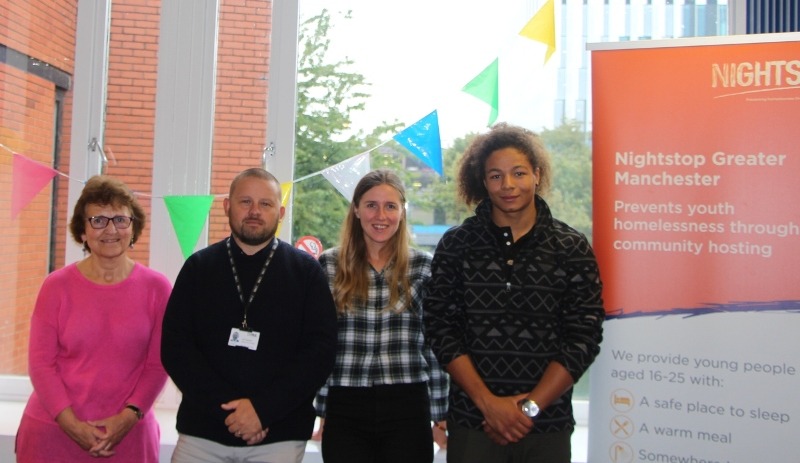
We recently visited the Nightstop Greater Manchester offices to meet with the team and learn more about what they do. We got some great stories from some amazing volunteers as well as their service manager. The work they do for homeless young people is inspiring.
From left to right:Rosemary (Volunteer), Dave (Nightstop Service Manager), Beth (Community Partnership Coordinator at Depaul UK), Milo (TeamKinetic).
We’ll be uploading a new video from our visit to Nightstop every day this week, either on YouTube, social media, or both – so keep your eyes peeled!
The Rugby World Cup is quickly approaching us, and I’m sure fans can’t wait for the contest to begin. The enjoyment of supporting your country before they go into battle against the opposition. I’m sure laughs, tears, and questionable language will be fuelled by countless pints down at many of your local pubs.
Small history lesson
The upcoming World Cup is a rugby union tournament contested every four years between the very toughest of international teams. The first-ever Rugby World Cup was contested in 1987, it was co-hosted by Australia and New Zealand with sixteen nations taking part. New Zealand became the first champions defeating France 29-9.
The warriors who succeed in their battles are awarded the Webb Ellis Cup at the end of the tournament. Legend has it that Webb Ellis was the inventor of rugby. Stumbling across the game by deciding to pick up the ball during a football match. Webb Ellis probably didn’t comprehend at the time of picking up the ball, that rugby would go onto generate revenue of approximately 228million pounds. This being the figure derived from the last Rugby World Cup hosted by England in 2015.
Rugby World Cup volunteers
The Japan 2019 organising committee has launched ‘Team No Side’ the official volunteers for the Rugby World Cup. Which is made up of over 10,000 volunteers across the twelve host cities of Japan. Around 38,000 volunteers applied for the position, these volunteers aim to connect and interact with fans to create a memorable experience. The recruitment process began in 2018 with successful applicants being given complete training in preparation for the big event.
The training for Team No Side started in February and March earlier this year. Their first training session covered learning about the history of the World Cup. I’m sure volunteering in the Rugby World cup will be a memorable experience. However, the volunteers involved are not allocated pre-paid travel cards to travel between each venue, neither will they receive any discount from accommodation providers. Which is hard to digest, as this is a globally televised event.
The Rugby World Cup previously hosted by England had more than 20,000 application forms submitted, with only 6,000 of the keenest people being granted success. The successful applicants joined the group named ‘Join The Pack,’ 4,000 of the volunteers were from Rugby clubs and the remaining 2,000 were from outside of clubs. Committee leader Debbie Jevans felt this was just the right balance of passionate rugby enthusiasts.
Rugby clubs near you
Many volunteers that are a part of their local clubs volunteer because they want to give something back. The volunteers may be ex-players themselves or have younger children who are passionate about the sport. Most clubs across the UK are very busy, grass pitches are the UK’s most popular space of physical exercise so it’s not surprising there is a demand for volunteers.
Throughout an average week, rugby clubs can receive a wide spectrum of players wanting to take part in various training sessions, juniors, men’s, women’s and touch. As you could imagine that’s a lot of muddy people to manage at one time. That’s during the weekdays alone, without considering match days on weekends, which could include tournaments and away games. Without volunteers, these opportunities for people to stay active and enjoy the sport would just not be possible. Rain or shine local coaches are there on the sideline giving constructive guidance or perhaps just hailing light-hearted abuse in your direction. But it’s all good fun!
If you think rugby is something you would like to be apart of then you should consider contacting your local clubs secretary. They will then be able to inform you what volunteering opportunities they have available, and the training you may need in order to start volunteering.
My dad was a volunteer coach. Without that type of involvement things just don’t happen and aren’t quite as good as they could be without volunteers. This is especially true in light of the Rugby World Cup.
Jonny Wilkinson
A volunteering inspiration
Jeremy Wares, 36 was diagnosed with Parkinson’s. Following his diagnosis, Jeremy was understandably shaken by the news. He had always wanted to coach his son in rugby but he wasn’t sure of the near future of his health at the time of his diagnoses.
In the previous 15years, Jeremy had made a living for himself being a chef in Paris. Catering in very well established restaurants which were fit for President Mitterrand. Jeremy had then gone on to establish his own restaurants in Scotland, 63 Tay Street and The Anglers Inn.
Despite the news, Jeremy was able to use his previous skillset of being a Caterer to organise events for Perthshire Rugby Club. These events have included the Perthshire Beer Festival which attracts around 20,000 people each year. Jeremy remains very hands-on with these events cooking a lot of the food himself. Alongside busy event planning, Jeremy has also been able to coach his son in the rugby team, which he was doubtful about at the start.
Inlight of his illness Jeremy felt he had to give something back and he’s done a fantastic job. Jeremy says “the secret is to remain active and keep going” only when he stops for too long does his condition seem to become more visible. Jeremy’s efforts were rewarded as Scottish volunteer of the season.
Grow your organisation with TeamKinetic
Grow your volunteering community with TeamKinetic volunteer management
TeamKinetic invites all organisations who feel they would be able to benefit from our software to get in touch. Remember we don’t limit the number of volunteers or the number of opportunities you can have available. We want your organisation and the communities you work with to grow and prosper.
The LFC foundation has 315 volunteers and 22 volunteering opportunities. According to our system, volunteers at LFC have recorded more than 1,200 hours of volunteering. The LFC foundation aims to create life-changing opportunities for children and young people. Currently, LFC works with up to 3,000 children and young people a week improving their health, education and overall chances in life.
Recently I was lucky enough to volunteer as part of the Respect 4 All project at LFC. Originally this project began in 2009 and helps approximately 400 participants every year. LFC works with local and national organisations in developing sport and physical activity opportunities for young children with complex needs.
I have to say that this was a spectacular day! During my time at LFC, I was able to witness the work LFC Foundation does. I can tell you now that LFC truly makes a difference to every young person’s life. LFC provides a space and an opportunity for these children to learn, get active and most importantly have fun! I would like to commend all the volunteers who were there as well, giving their own free time up to help benefit and make a change to someone else’s life for one day. Luckily for me, I had the chance to speak to some of the volunteers and get there say on why they volunteer.
I previously volunteered for ‘Everton In The Community’ for 15 years maybe more (said under his breath quietly). I started at Everton because my grandad was an Everton fan and he first introduced me to the club. But it is my first time volunteering at Liverpool today and hopefully one of many. I like helping out where ever I can, volunteering makes me feel happy and useful it’s something I don’t plan on stopping, I love doing what I do. Alongside volunteering, I play for the LFC Foundation disability football team who I train with every Monday. As much as I love volunteering in football – I also love playing it too.
Paul aged 39 (LFC Volunteer and football player)
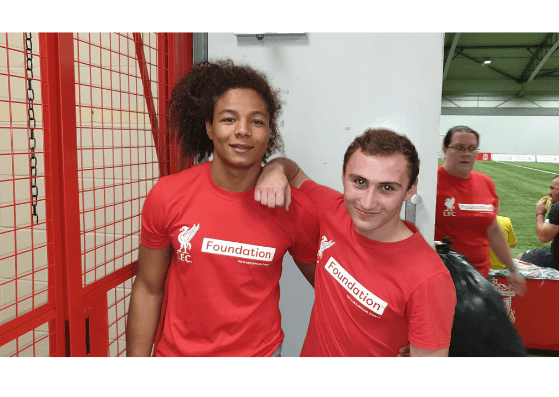
Milo and Micheal
I’ve been volunteering for the last year at LFC because of my educational pathways. At college, I am currently studying in sports and my future career goals are to be a football coach. So to pursue my career goals I have been helping out at LFC Foundation to gain some experience. But as well as seeking a job in coaching, I enjoy meeting new people and most of all it can be a really good laugh. Also, I am quite an active person and I don’t like sitting around the house. LFC provides a chance for me to get out and do something physical. The secret for me is enjoying what I do, then it doesn’t seem like work.
Micheal Murray Aged 17 (Student)
Milo and Anas
Today is my first day volunteering at The LFC Foundation but I am enjoying it thoroughly. Previously I have volunteered at the Netball World Cup in Liverpool. But I am volunteering here today because I am a Liverpool football fan who just wanted to help out in my local community. I feel it is something everyone should try to get involved with at least once in their lives. Originally I am from India but I am spending my time in Liverpool to pursue my master’s degree in cardiovascular health. During the time I have left before my degree is over I want to get involved in as many volunteering opportunities as possible.
I was able to find the Respect 4 All opportunity through using The LFC Foundations webpage. Which uses TeamKinetic volunteering management system. The system was very easy to manoeuvre around and made finding and signing up to opportunities easy, I had no issues at all.
Anas usman aged 28 (physiotherapist)
Be happy and love what you do
What was great about listening to the volunteers was that I could tell that each volunteer I spoke to was passionate and happy to be volunteering at LFC. All the volunteers that I spoke to were happy and smiling, be it there first time or one of many. This reflects so positively on LFC and also the volunteering community.
Volunteering attracts a wide spectrum of people who volunteer for many different reasons. Education, helping the community, the love of helping others or being associated with local clubs. Each volunteer has a purpose of why they want to volunteer and what they want to get out of it.
The question is: What’s your purpose and what do you want to achieve from volunteering? Only you can know that.
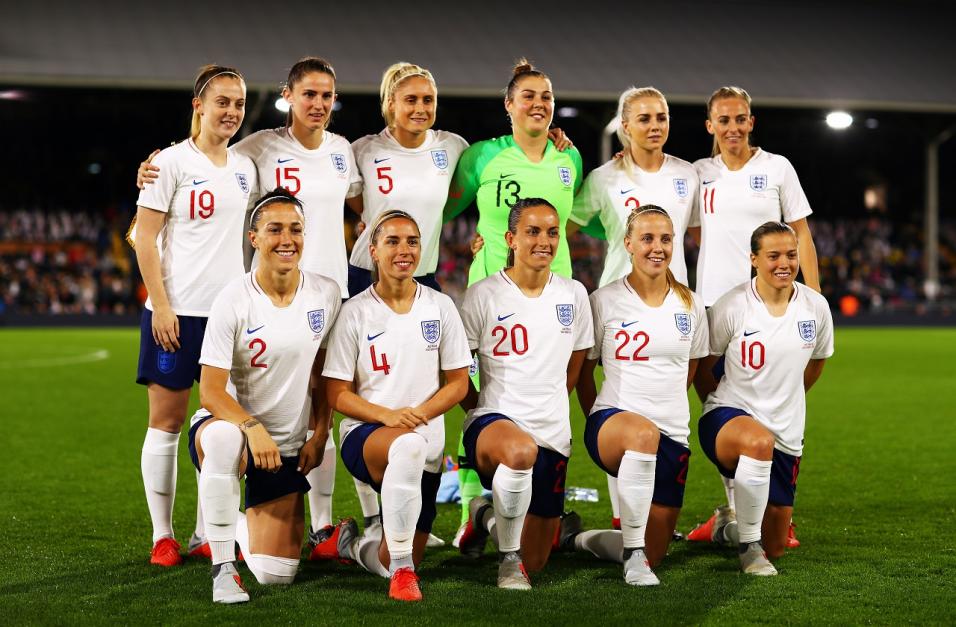
It’s been over two months since the FIFA Women’s World Cup 2019 captured the nation’s attention with some thrilling games; the tournament didn’t fall short of goals with 146 in total, and England’s semi-final v USA had us on the edge of our seats.
In the early 20th century, women’s football was very popular and grew in popularity as men went to war. The famous Dick Kerr Ladies played St Helen’s Ladies on Boxing Day in 1920, attracting over 53,000 spectators to Everton’s Goodison Park with thousands of fans watching from outside. Higher attendance figures than most football clubs today!
However, in 1921 the FA decided it would implement a ban on female participation in the sport. Football was considered to be unsuitable for women and they believed it should not be encouraged. Luckily, views began to change in the 1960s, with the Women’s Football Association (WFA) being formed in 1969. The ban on women’s football was officially rescinded in 1971 by the FA after persuasion from the WFA. We have to wonder what would have happened if women’s football was never banned… Would it be more popular than the men’s game today? Would we see more equality – or even total equality – in the sport?
England wasn’t the only country to ban the sport either, with bans in Norway (1931), France (1932), Brazil (1941), and West Germany (1955). In contrast, in 1972 the USA added legislation (named Title IX) that prohibited discrimination on the basis of sex in any educational program or activity that received federal funding. In other words, when it came to football (or soccer) in school, men and women were awarded equal rights. This is probably why the USA are such powerhouses of women’s football today! However, they still can’t get equal pay from the US Soccer Federation.
On the rise again…
Since the first FIFA Women’s World Cup in 1991, football has seen steady growth amongst women across the world. With an average of 150,000 female players competing in the affiliated league and cup competitions in England alone. Nevertheless, there is still room for improvement and growth.
Referee Stephanie Frappart also took charge of the 2019 UEFA Super Cup, making her the first woman to take charge of a major men’s UEFA cup final.
The game has come on a long way in many ways, in terms of the Womens’ World Cup which we all watched this summer and showed how much respect the women’s game is getting. We’re trying to make strides and there’s a long way to go but [the cup final] will be a huge moment because it’s one more step in the right direction.
Stephanie Frappart
Furthermore, the FA Women’s Championship started last weekend and the FA WSL returns this weekend with a massive game. Manchester City and newly-promoted Manchester United will battle it out for their first three points of the season at the Etihad Stadium. Tickets for all WSL and Championship games can be found here.
So how do we get more young females involved in football?
Maybe we should start by giving them the opportunity that was once taken away from them? Or maybe we could just make all women’s football more accessible to watch.
Well, The FA may have done just that! They recently announced that all 132 WSL games and select Championship games would be streamed live via their app. This is a massive step which will hopefully increase the viewership of women’s football. However, some don’t agree with the move, stating that it will lower stadium attendances.
Female involvement doesn’t have to stop at the participation level. Roles in football go beyond playing; coaches, referees, administrators, pundits, volunteers all contribute to the success of the sport too.
Organisations we work with that are making a difference:
We work with a number of organisations that sit at the forefront of football and are making a real impact when it comes to female participation. Some of these organisations include the Liverpool FC Foundation and the Manchester Football Association.
TeamKinetic caught up with Katherine Jones from the Manchester FA to talk about some of the work they do around the city to impact women’s football.
This is what she had to say…
What is being done at your organisation to ensure women’s football continues to grow, and what things could be done to improve this?
Katherine gave me a long list of great things the Manchester FA is doing to ensure the growth of the women’s game! The full list is as follows:
Work with leagues to ensure that suitable playing pathways exist, promoting the transition from youth to adult football.
Work with clubs to support them to develop a full pathway (U7-Open age) for female players to access football.
Run celebration events to enhance and celebrate the female game.
Raise the profile of the game through focussed promotion (Women’s World Cup, Women’s Euros, Olympic games).
Support clubs and organisations to run the FA Wildcats programme as the main engagement programme for 5-11-year-old girls.
Work with the local school sports organisers to facilitate and support girls football programmes across Oldham, Tameside, Trafford, Manchester and Salford.
Deliver a monthly further education football and futsal offer.
Drive and develop a monthly futsal offer for girls in the U8-U16 age group.
Deliver a recreational female football opportunity on a weekly basis.
Create a full pathway from casual entry-level participation, to our highest placed amateur teams within the regional league structure.
Support players performing well within grassroots football to access the Regional Talent Club pathway (Manchester City & Manchester United Girls RTC’s).
Support female referees and coaches along with officials working within the female game.
Have you seen higher success rates in any particular approaches so far?
“We’ve seen a lot of success across the board, to be honest, Wildcats is our flagship entry-level programme to engage new girls within football, and this has seen lots of success in bolstering mini soccer (5-11) participation. The programme has been rolled out across clubs and providers and we have 33 centres currently running across Manchester, which provides an opportunity for girls to access football, within a short travelling distance regardless of where they live within Manchester.”
Have you experienced any pushback from clubs/leagues around Manchester?
“We haven’t seen any pushback really, because the vast majority of people now understand the emphasis and importance of facilitating football opportunities for female players, and people are much more engaged with female football at the top level, so they appreciate the technical ability level that female players can reach.”
Why is it important to get more women involved in football/football volunteering?
“The importance of these opportunities and the role models involved in the game is significant to inspire the next generation of female football, and to ensure that the game continually grows as the first choice sport for women in England.”
I would like to thank Katherine for her time, answering my questions gave great insight into all the amazing work the Manchester FA do!
The importance of female volunteers in women’s football
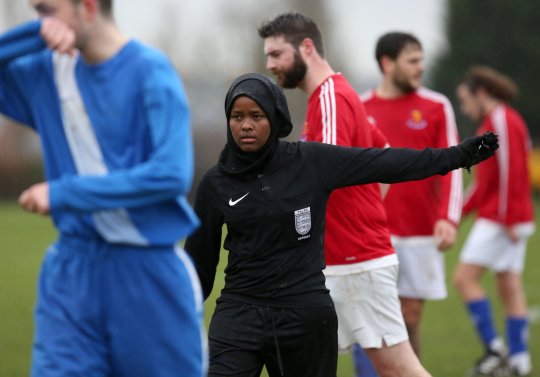
Britain’s first female Muslim football referee
Football is the most popular sport in the world! Played by millions of people each day, but it simply wouldn’t be possible without volunteers.
There isn’t a football game or competition that doesn’t involve at least one volunteer. It goes without saying, volunteers are an integral part of sports success. This plays an even bigger role in women’s football!
The increase of female participation in football calls for more volunteers to ensure the game continues to expand and grow. By having more regular female volunteers, young girls getting involved in football/football-related activities can receive the support they deserve.
How volunteers can help football
There are a number of roles and activities volunteers can get involved in to help:
Volunteer with your local club
Most local clubs are always in need of volunteers to help out with a variety of roles on offer; from running social media accounts to being a fixture secretary.
Become a first aider
Every week teams play and every week someone gets injured, so there is always a desire for first aiders. St John Ambulance and British Red Cross run first aid training courses.
Become a coach
What better way to inspire the next generation of talented female footballers than to be the one coaching them? There are a number of ways of getting started and its a great way to challenge yourself.
For more information on how TeamKinetic can assist with your volunteer management and getting the best out of all your volunteers visit our website, or contact us on – 0161 914 5757